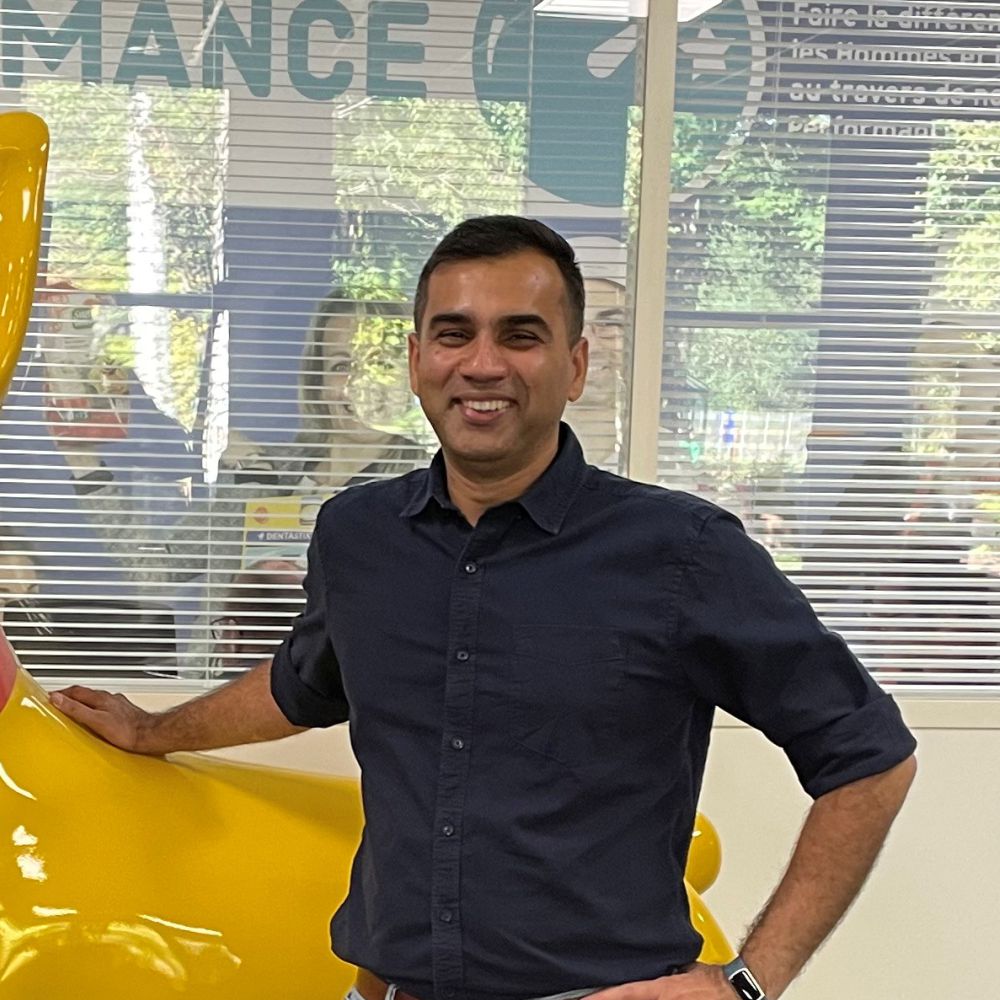
As AI steadily reshapes supply chain operations, the conversation is no longer just about automation, but about how organisations balance technological intelligence with human judgement. Ashish Joshi, Senior Supply Chain Director – Europe, Mars, reflects on the evolving role of talent, leadership, and decision-making in building supply chains that are not only digitally enabled, but also adaptive, contextual, and deeply customer-centric.
While AI adoption in supply chains is still evolving in markets like India, how do you see the role of human decision-making changing as these technologies scale?
AI adoption in supply chains is still evolving, not only in India but globally as well. Very few organisations today can claim to have implemented AI-led use cases at scale across their end-to-end operations. Most companies continue to remain in a ‘Test-and-Learn’ phase, experimenting with pilots while evaluating where AI can create sustainable business value.
That said, it is already evident that several supply chain functions — including demand planning, supply planning, network optimisation, distribution planning, and customer service — will undergo significant transformation. Activities traditionally dependent on manual analysis and repetitive decision-making will increasingly become automated, predictive, and system-enabled.
However, this does not reduce the importance of human judgement. Instead, the nature of decision-making will evolve. Supply chain professionals will gradually move from operational execution toward contextual interpretation, strategic oversight, and orchestration. AI can process data and generate recommendations rapidly, but supply chains continue to operate in dynamic environments shaped by market volatility, customer behaviour, geopolitical uncertainty, and human relationships.
As these technologies scale, human judgement will remain essential in balancing algorithmic recommendations with business realities and long-term strategic priorities. In many ways, AI will augment human capability rather than replace it.
Which traditional supply chain roles are losing relevance, and what new roles or capabilities are emerging as critical in this shift?
Roles centred around repetitive analytics, transactional execution, and routine exception handling are likely to be impacted most significantly by AI-driven transformation. Functions involving manual reporting, forecasting adjustments, operational coordination, and basic decision support will increasingly become automated as intelligent systems mature. The shift, however, is less about eliminating roles and more about changing nature of work. Supply chain professionals will need to evolve from being ‘DOERS’ to becoming ‘ORCHESTRATORS’ — individuals who oversee interconnected systems, interpret insights, and drive cross-functional collaboration.
This evolution could particularly affect segments of the BPO and shared services industry, where repetitive and rules-based activities have historically formed the operational backbone. Even basic levels of exception handling are increasingly being managed through AI-enabled systems capable of learning from historical patterns.
At the same time, new capabilities are becoming critical. The relevance of data scientists, AI specialists, data stewards, and digital process architects will continue to rise sharply. Organisations will increasingly require professionals who can ensure data quality, govern intelligent systems, and bridge the gap between technology platforms and operational realities. More importantly, future supply chains will value professionals who combine domain expertise with digital understanding and strategic thinking.
What are the most essential skills the next-generation supply chain professional must develop to remain relevant in an algorithm-driven environment?
In addition to learning how to work with AI tools and advanced technologies, staying deeply aware of changing business realities will become even more important for the next generation of supply chain professionals. As organisations become more dependent on algorithms and automated decision-making, there is also a growing risk of relying excessively on systems while losing sight of the broader context and practical business judgement. Algorithms can provide recommendations based on data patterns, but they cannot fully account for evolving market dynamics, behavioural shifts, or the nuances of human relationships.
Human wisdom, common sense, and contextual understanding will therefore continue to remain highly relevant for a long time to come. Professionals who can combine data-driven insights with commercial understanding and operational pragmatism will be far more valuable than those who rely solely on technical proficiency.
At the same time, adaptability and continuous learning will become essential. The pace of technological change is likely to remain extremely rapid, requiring professionals to constantly evolve their capabilities. Communication, collaboration, and the ability to work across interconnected ecosystems will also become increasingly important. Ultimately, the most future-ready professionals will be those who can combine digital fluency with strategic thinking, business awareness, and sound human judgement.
There is a clear gap between current supply chain talent and emerging AI-driven capability requirements. What are the most effective ways to bridge this gap?
Upskilling existing teams is likely to be the fastest and most cost-effective way to bridge the growing capability gap, rather than depending entirely on external hiring. Existing supply chain professionals already possess valuable institutional knowledge, operational understanding, and business context, which provide a strong foundation for adapting to AI-enabled ways of working.
While hiring specialised talent may bring fresh digital expertise into the organisation, relying solely on external recruitment is unlikely to be sustainable over the long term. Organisations that invest in developing their current workforce are more likely to build resilient and adaptable teams capable of evolving alongside technological change. However, upskilling must go beyond basic technical training. Employees need exposure to how AI, analytics, and automation can influence decision-making and reshape operational processes. Creating a culture of continuous learning and digital curiosity will be equally important.
Leadership also plays a critical role in enabling this transition. Employees need to view technology not as a threat to their relevance, but as an enabler that enhances their effectiveness and decision-making capability. Ultimately, AI transformation is not only a technology journey — it is equally a workforce and mindset transformation.
How are organisational structures and leadership models evolving as supply chains move from process execution to system orchestration?
Historically, supply chain organisations relied on large execution-heavy layers to manage transactional processes and operational coordination. As automation takes over many repetitive tasks, organisations will have the opportunity to strengthen their middle layers of leadership and expertise.
This shift will enable greater focus on collaboration, ecosystem management, and strategic coordination with suppliers, logistics partners, distributors, and customers. Leadership models are also becoming less hierarchical and more adaptive. Future leaders will need to encourage faster decision-making, manage ambiguity, and lead through influence rather than control. In essence, supply chains are transitioning from execution-centric structures to intelligence-led ecosystems, requiring a very different balance of skills and leadership capabilities.
In high-stakes situations, how should organisations balance trust in AI-driven recommendations with human judgement?
AI tools can undoubtedly help organisations arrive at potential solutions with far greater speed and analytical depth than traditional methods. In high-stakes situations, this capability can significantly enhance responsiveness by processing large amounts of data and presenting possible scenarios in real time. However, important decisions cannot be evaluated solely through the lens of numbers and algorithms. Supply chain decisions often carry broader consequences that affect employees, customers, suppliers, and long-term business relationships. While AI may optimise for efficiency or cost, it still lacks the human sensitivity and contextual understanding required to fully appreciate the emotional and relationship-driven dimensions of decision-making.
It will take considerable time for AI to truly understand the complexities of human interactions and behavioural dynamics within organisations. Until then, human judgement will continue to play a critical role in interpreting AI-generated recommendations and evaluating their broader implications beyond operational metrics. The most effective organisations will therefore adopt a balanced approach where AI acts as a powerful decision-support enabler rather than a complete substitute for human thinking.
Looking ahead, what will differentiate supply chains in an AI-driven future, and how will talent capability shape and accelerate this growth?
Staying focused on customers — both internal and external — will continue to remain the most important differentiator for businesses and supply chain functions, even in an increasingly AI-driven future. While technology will play a transformative role in enabling faster and more intelligent operations, long-term relevance will still depend on how effectively organisations evolve alongside changing customer and consumer expectations.
AI can significantly strengthen supply chains by improving visibility, forecasting accuracy, agility, and decision responsiveness. However, technology alone will not create sustainable competitive advantage unless it is supported by the right organisational mindset and talent capability.
The organisations that will lead in the future are likely to be those that can successfully combine technological advancement with human adaptability. Future-ready supply chain professionals will need to be digitally aware, strategically agile, collaborative, and continuously open to learning and reinvention. Ultimately, the future of supply chains will not be defined solely by the sophistication of technology adoption, but by how effectively organisations integrate human intelligence with artificial intelligence to build more adaptive, responsive, and customer-centric ecosystems.
(Disclaimer: The views, insights, and opinions expressed in this interview are solely those of the author and are shared in an individual and professional capacity. They do not necessarily represent or reflect the official views, positions, strategies, or policies of the author’s employer, its leadership, subsidiaries, or affiliated organisations. The discussion is intended purely for industry knowledge-sharing and thought leadership purposes.)


 Categories