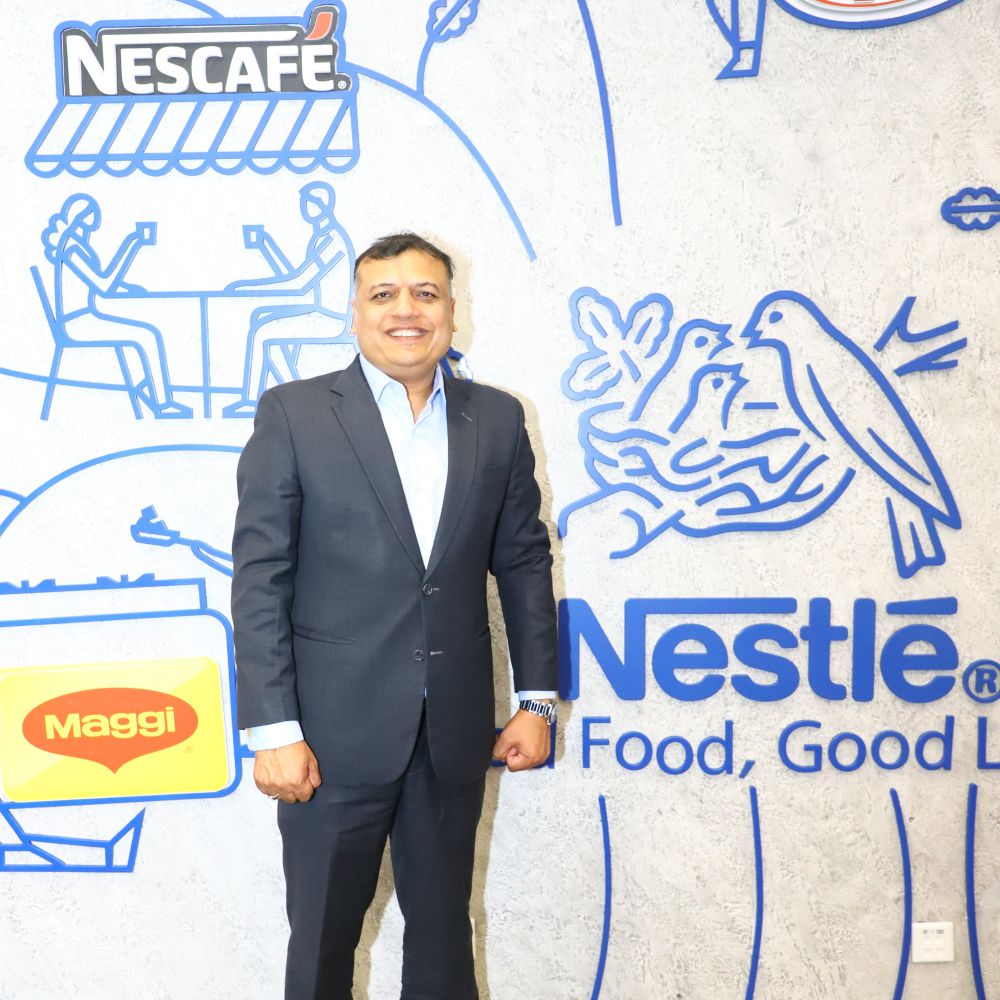
Quick commerce has transformed India’s Food & Beverage industry, shrinking replenishment cycles to hours and making supply chain performance the new measure of brand trust. As Ronit Verma, Head – Supply Chain Management, Storia Foods and Beverages, notes, consumers now demand instant availability, uncompromised freshness, and sustainable practices — all delivered at razor?thin margins. In this environment, leadership must evolve beyond operational wins to embed intelligence, agility, and resilience into every node of the system. The future belongs to those who design supply chains that deliver speed without chaos, freshness without compromise, and sustainability without margin erosion. An excerpt…
In a market shaped by quick commerce, demand volatility, and compressed replenishment cycles, how must supply chain architecture evolve to support speed without structurally inflating costs?
Ronit Verma
The Indian beverage market today operates on a paradox – consumers expect fastest availability, yet the economics of fast-moving, perishable SKUs leave razor-thin room for cost mismanagement. The answer lies not in building more infrastructure, but in building smarter infrastructure.
What to do? The design principle is clear – speed must be structurally built in, not operationally improvised. This demands a shift from a linear, push-based model to a distributed, demand-signal-driven architecture. Preference should be on investing in strategic micro-fulfilment nodes closer to consumption clusters — metros, Tier-1 cities, and emerging Tier- 2 corridors — reducing last-mile transit time without the capex burden of large-format warehouses across every pin code.
The quick commerce revolution, led by platforms like Blinkit, Zepto, and Swiggy Instamart, has fundamentally compressed replenishment windows to hourly based expectations. Responding to that at scale requires slotting discipline, SKU rationalisation at the dark-store city level, and dynamic inventory allocation driven by real-time sell-through data. Speed without embedded intelligence is simply expensive chaos. The architecture must therefore simultaneously optimise for responsiveness and working capital and that balance is what separates supply chain leaders from supply chain followers.
“Speed is not a logistics upgrade - it is an architectural decision. Build it in or pay for it forever.”
As brands scale rapidly across markets, what structural mistakes do you see companies making in their supply chain design?
The most consequential mistake in scaling FMCG and beverage brands in India is mistaking distribution width for supply chain depth. Brands rush to add cities and outlets, often without the foundational logistics backbone, inventory visibility, or demand planning capability to sustain that footprint. The result is a classic ‘Expand and Break’ cycle – service levels deteriorate, product freshness is compromised, and working capital gets trapped in the wrong geographies.
The second critical error is under-investing in primary and mid-mile infrastructure while over-indexing on last-mile heroics. In a country as geographically diverse and logistically fragmented as India – from the Himalayan foothills to coastal Tamil Nadu – you cannot build a reliable supply chain on the back of aggregated third-party trucking alone. Deeply integrated mid-mile capabilities are non-negotiable at scale.
Third, and perhaps most damaging long-term, is building supply chains that mirror the organisational structure rather than the customer’s consumption pattern. Siloed planning between sales, operations, and finance leads to misaligned inventory positions, missed fill rates, and avoidable write-offs. Supply chain design must follow the flow of demand, not internal reporting lines.
“Distribution width without supply chain depth is not scale - it is exposure at scale.”
How do you balance working capital discipline with service excellence in a category where freshness and availability are critical?
This is the central tension every beverage supply chain professional navigates daily - and there is no universal formula. What we have learned is that freshness and availability are not competing objectives if your inventory architecture is right.
The discipline begins at the SKU level. We focus on maintaining velocity-based differentiation – high-velocity SKUs carry lean, rolling stock aligned to 15–21 day coverage; slower or seasonal variants are managed on a more responsive, demand-triggered replenishment model. This prevents the classic trap of uniformly high safety stocks across the portfolio, which inflates working capital while masking poor forecasting.
On the service side, the commitment to freshness is non-negotiable in a segment where consumers are increasingly label-literate. Our aseptic processing and cold-chain integrity give us a good shelf life without preservatives - but that shelf life must be protected through disciplined FEFO management throughout the distribution chain. The metric we should track closely is Days of Freshness Delivered - not just fill rate. A product delivered at 90% of its remaining shelf life is not a supply chain win. Balancing this requires a mature conversation between commercial and supply chain teams, and that conversation must be grounded in data, not just gut instinct.
“Freshness is not a supply chain constraint - it is the brand promise your supply chain must never break.”
Supply chains are no longer optimized for yesterday’s patterns — they must self-adapt. What operating capabilities are most critical to embed responsiveness at the core of the system?
Responsiveness is not a technology capability - it is an organisational capability enabled by technology. The most critical building blocks are:
Demand sensing over demand forecasting: Traditional statistical forecasting is structurally backward-looking. In a market where a viral social media moment, a cricket season, or a heatwave can spike demand by 40% in just 48 hours, you need real-time sell-out signal integration – from retail POS data, quick-commerce dashboards, and distributor secondary sales - feeding directly into replenishment triggers.
Integrated Business Planning (IBP) with short-cycle cadences: Weekly S&OP reviews are no longer sufficient. We should run rolling 13-week demand-supply reviews supplemented by a rapid-response protocol for demand spikes or supply disruptions. This keeps the entire value chain – procurement, manufacturing, logistics, and commercial - aligned on a single number.
Supplier and co-manufacturer agility: Your supply chain’s responsiveness is bounded by the least responsive node within it. This means investing in supplier development, lead-time compression at source, and maintaining pre-committed surge capacity with key co-manufacturing partners.
Empowered frontline decision-making: Centralized command-and-control supply chains are inherently slow. Building decision rights and exception-based management at the distribution and warehouse level multiplies the system’s response speed without proportional cost.
“A supply chain that reacts to yesterday’s data is not responsive — it is perpetually late.”
With geo-political shifts and regional manufacturing realignments underway, how are you rethinking sourcing strategy beyond the traditional cost-versus-risk equation?
The cost-versus-risk binary is increasingly inadequate. We now evaluate sourcing across a three-dimensional lens: Cost, Resilience, and Strategic Optionality.
The post-COVID and ongoing geo-political disruptions – from Red Sea shipping volatility to shifting US-China trade dynamics – have had direct implications for the Indian F&B industry, particularly for brands which source globally. Import happens from multiple international origins, each of these sourcing lines should be re-evaluated not just on landed cost but on supply continuity risk, lead-time variance, and the strategic value of geographic diversification.
The broader India narrative works in favour. Atmanirbhar Bharat and the PLI schemes for food processing are accelerating domestic ingredient development. F&B Industry actively building partnerships with domestic ingredient suppliers as parallel sourcing lines – not as a wholesale replacement for international procurement, but as a structural hedge that also strengthens the India manufacturing ecosystem.
The emerging principle is: source global for uniqueness and quality differentiation; source domestic for resilience and speed. That dual-track approach is what a future-proof beverage supply chain in India must embed.
“In a fractured world, the most expensive sourcing decision is the one that leaves you with a single point of failure.”
When footprint expansion decisions are taken today, what trade-offs do you weigh between speed of reach, capital intensity, and supply predictability?
Footprint expansion in India is deceptively complex. The allure of 50,000 or 100,000 outlet coverage numbers can obscure the underlying supply chain cost-to-serve reality. The trade-off framework to be applied considers three variables simultaneously:
Speed of reach is assessed not just as geographic coverage but as productive reach - outlets where product is stocked, rotated, and sold regularly, not simply listed. Phantom distribution – where outlets carry the product on paper but face chronic stockouts – is a silent killer of brand equity and supply chain efficiency alike.
Capital intensity must be weighed against asset utilisation economics. A warehouse in a new geography that operates at 40% utilisation for the first 18 months may be strategically justified if it unlocks a high-potential market cluster, but that decision must be made consciously, with a defined payback horizon, not reactively under commercial pressure.
Supply predictability is where many brands underestimate the challenge of expansion into India’s Tier-2 and Tier-3 markets. Road infrastructure, ambient temperature variability, cold-chain gaps, and distributor capability are all non-trivial variables. Expansion playbook now includes a supply readiness assessment for every new geography before commercial activation – ensuring the supply chain is never the constraint that limits a market’s potential.
“Productive reach is the only reach that matters - a listed outlet that stockouts is not distribution, it is a missed promise.”
Data is widely discussed, but execution varies. How is analytics practically improving forecasting accuracy and inventory positioning in your organisation?
The honest answer is that analytics value is realised in execution, not in the sophistication of the models. Our analytics journey has been deliberate and grounded in business impact rather than technological ambition for its own sake.
The most meaningful improvement comes from integrating secondary sales data - distributor offtake, quick-commerce platform sell-through, and key modern trade POS data – into demand planning cycle. This shift from shipment-based forecasting to consumption-based sensing reduces forecast error meaningfully, particularly for seasonal beverage SKUs, which exhibits strong weather and occasion-driven demand patterns across India.
On inventory positioning, usage preferred of ABC-XYZ segmentation to differentiate stocking strategies across distribution network. High-velocity, predictable SKUs are managed with tight replenishment parameters; high-value but volatile SKUs carry strategically positioned buffer stocks at regional level rather than at the outlet or distributor level. This allows to improve product availability while reducing overall system inventory - the classic efficiency-service trade-off being resolved not by compromise but by precision.
The next frontier for is predictive analytics for expiry risk management using sell-through velocity data to proactively redirect or liquidate inventory before it becomes a write-off. In a freshness-critical category, this is one of the highest-ROI applications of supply chain analytics.
“Analytics without execution context is intelligence wasted. The real measure is whether your planners make better decisions every morning because of it.”
In your view, what separates digital investments that transform supply chains from those that simply automate existing inefficiencies?
This is a question every supply chain leader must ask with unflinching honesty before signing a technology investment. The graveyard of FMCG / F&B supply chains is littered with expensive ERP implementations, warehouse management systems, and digital dashboards that automated broken processes without fixing the underlying design.
The defining differentiator is whether the digital investment changes what decisions are made or merely speeds up the same decisions. True transformation means the system surfaces insights that were previously invisible – demand signals you couldn’t see, supply risks you couldn’t anticipate, cost structures you couldn’t diagnose at the SKU-lane-customer level.
A real-time view of secondary sales across 50,000+ outlets, integrated with production and logistics status, delivers more business value today than a state-of-the-art AI forecasting engine running on siloed, stale data. Build the data foundation first. Then apply intelligence.
The second litmus test is adoption at the operational level. A tool that the supply chain planner uses every morning to make better replenishment decisions is transformational. A beautiful analytics dashboard reviewed monthly by leadership is an expensive reporting exercise. Transformation lives in the daily decision-making rhythm of your execution teams.
“Automating a broken process faster is not transformation - it is precision failure at scale.”
How do you institutionalize supplier collaboration to move beyond transactional procurement toward strategic partnerships?
Transactional procurement treats suppliers as interchangeable inputs. Strategic partnerships treat suppliers as extensions of your own capability — and in a high-growth, innovation-led business, that distinction is existential.
The institutionalisation begins with supplier segmentation based on strategic value, not just spend. Co-manufacturing partners, who are integral to production capacity and geographic reach, are managed under a fundamentally different engagement model than commodity packaging suppliers. With strategic partners, we can share demand forecasts, capacity plans, quality roadmaps, and even product innovation pipelines. This mutual transparency creates the conditions for suppliers to invest in capability on our behalf - something no purchase order can mandate.
You can have this formalised through quarterly business reviews with key partners, joint problem-solving on quality and yield challenges, and in some cases, shared investment in process improvement initiatives. The return on this investment is measured not just in cost savings but in supply assurance, lead-time reliability, and the speed of new product introduction – all of which are critical competitive levers in the fast-moving beverage segment. The cultural shift required is from buyer-supplier to co-creator – and that shift must be visible at the leadership level, not just in procurement policy documents.
“A supplier who shares your ambition will outperform a supplier who merely fulfils your purchase order - every single time.”
What metrics truly reflect supply chain excellence today, beyond traditional KPIs like cost per case or fill rate?
Cost per case and fill rate remain necessary but are no longer sufficient measures of supply chain excellence. The metrics that truly reflect competitive capability in today’s F&B environment are:
Freshness Index – the percentage of product delivered to end consumers with a defined minimum remaining shelf life. This is a brand equity metric as much as a supply chain metric.
Demand Forecast Accuracy at the SKU-Region level – not at aggregate portfolio level, where averaging masks critical misallocations between geographies and channels.
Perfect Order Rate – delivered on time, in full, without damage, with accurate documentation. A composite metric that reflects the true end-to-end experience of the customer.
Working Capital Velocity – Days of Inventory Outstanding (DIO) as a system-level metric, including distributor and channel inventory, not just at the manufacturing node.
Supply Chain Carbon Intensity per case – as sustainability accountability becomes non-negotiable, this is rapidly entering the boardroom KPI set.
Quick Commerce Fill Rate by Platform – a new metric born from the q-commerce era, measuring our ability to maintain in-stock positions on Blinkit, Zepto, and Swiggy Instamart across cities and time windows.
The supply chain of 2026 is evaluated on customer experience delivered as much as operational cost incurred.
“The supply chain that only measures what it costs has not yet understood what it is worth.”
Sustainability is increasingly tied to competitiveness. How can food and beverage supply chains realistically embed environmental responsibility without eroding margins?
The framing of sustainability as a margin threat is, in my view, an outdated and strategically dangerous lens. The question should be: how do we design supply chains where sustainability and efficiency are the same decision?
For the brands which are committed to natural, preservative-free products is not simply a brand positioning, it shapes every supply chain decision, from ingredient sourcing to packaging specification to cold-chain design to last-mile. Products without preservatives require more supply chain precision – tighter temperature management, shorter replenishment cycles, more disciplined FEFO execution – but that precision also reduces waste, and waste reduction is directly margin-accretive.
On the packaging front, the shift toward sustainable materials is increasingly economically viable at scale in India. The GST and extended producer responsibility (EPR) frameworks are creating both compliance imperatives and economic incentives for brands to invest in recyclable and reduced-plastic packaging.
The most tangible near-term opportunity is in logistics decarbonisation – route optimisation, load consolidation, and the gradual transition of primary and secondary distribution fleets to CNG and EV options. These investments typically show positive ROI within 3-4 years, making them economically defensible.
Sustainability embedded in supply chain design is not a cost centre - it is a resilience and efficiency multiplier for the decade ahead.
“Sustainability is not a tax on efficiency - it is the discipline that reveals where your supply chain was wasteful all along.”
With rising omnichannel complexity and quick-commerce models, how must supply chains redesign fulfilment models to stay competitive?
The era of the single-channel, single-fulfilment-model supply chain is definitively over. Today, we serve general trade kirana stores, modern trade supermarkets, institutional channels, e-commerce platforms, and quick-commerce dark stores – each with fundamentally different service requirements, order profiles, and replenishment logics.
The design imperative is channel-differentiated fulfilment within a common inventory pool. This means maintaining consolidated inventory at strategic regional nodes, with the last-mile routing and service parameters customised by channel. Running separate inventory silos per channel is operationally inefficient and capital-destructive at scale.
For quick commerce specifically, the critical design elements are: accurate dark-store inventory visibility (ensuring our products are stocked and available in real-time, not just listed), rapid replenishment agreements with platform partners for fast-moving SKUs, and SKU pack-size alignment to the consumption patterns of quick commerce shoppers who typically purchase single-serve or small-format units.
The broader organisational shift required is in integrated demand visibility across channels. When quick-commerce sales spike for key SKU during a heatwave in Mumbai, that signal must instantaneously flow back to production planning and raw material procurement. Omnichannel fulfilment excellence is ultimately an information and integration challenge as much as a physical logistics challenge.
“One inventory pool, many fulfilment expressions - that is the architecture of the omnichannel era.”
Is supply chain leadership gaining greater voice in boardroom strategy discussions? What is driving this shift?
Unambiguously, yes - and the pandemic was the watershed moment that catalysed this elevation globally and in India. For years, supply chain was perceived as an operational function – a cost to be managed, not a capability to be invested in. COVID-19 exposed the catastrophic vulnerability of that perception when global supply chains fractured simultaneously.
In the F&B Industries, several additional forces are accelerating this shift. The explosive growth of quick commerce has made supply chain responsiveness a brand differentiation factor - consumers now associate a brand’s reliability with its supply chain performance in ways that were previously invisible to them.
Investor scrutiny of FMCG and food-tech companies has sharpened considerably on unit economics and working capital management - both of which are fundamentally supply chain outcomes. Founders and boards are learning, sometimes painfully, that commercial growth without supply chain discipline is a value-destruction exercise.
Supply chain has always held a seat at the strategy table. As we scale toward deeper national penetration and new category entries, decisions on manufacturing footprint, co-packer partnerships, distribution architecture, and sustainability commitments are supply chain decisions first – and commercial decisions second. That integration of supply chain thinking into strategic planning is what I believe defines the most competitive consumer brands in India today.
“When supply chain breaks, the boardroom notices. The best organisations don’t wait for the break - they give supply chain a seat before the crisis earns it one.”
For young professionals entering the supply chain domain today, what core capabilities and mindset should they prioritize to remain future-ready?
The supply chain professional of the future in India must be genuinely multi-lingual - fluent in data analytics, comfortable with technology platforms, operationally grounded, commercially aware, and deeply curious about the human and physical systems that make supply chains function.
The technical capabilities I would prioritise are: demand planning and statistical forecasting fundamentals, supply network design thinking, and working capital management. These form the analytical spine of any supply chain leadership role.
But the differentiating capability – the one that no algorithm can replicate - is structured problem-solving under ambiguity. India’s supply chain environment is inherently complex: fragmented trade, infrastructure variability, diverse regulatory frameworks across states, and the pace of market change that is unlike anywhere else in the world. Young professionals who can decompose complex problems, build pragmatic solutions, and adapt rapidly will consistently outperform those with strong technical knowledge but limited contextual agility.
I would also emphasise cross-functional empathy. The best supply chain professionals I have encountered understand what a sales manager needs to win in the market, what a CFO needs to protect working capital, and what a manufacturing team needs to run efficient operations – and they design supply chain solutions that honour all three simultaneously. Finally, invest in building your external network within the supply chain community.
“The supply chain professional who only understands logistics will be managed by the one who also understands the business.”
If you were to define the next frontier of supply chain excellence in India, what would it look like?
The next frontier of supply chain excellence in India is the Intelligent, Inclusive, and Integrated Supply Chain - and these three dimensions are deeply interdependent.
Intelligent – Powered by real-time data flows from farm to shelf, with AI-assisted decision-making embedded at every planning and execution node. Not artificial intelligence as a buzzword, but applied intelligence that makes every supply chain planner, warehouse manager, and logistics partner demonstrably more effective in their daily decisions.
Inclusive – Extending supply chain capability and digital access to the vast informal tier of India’s distribution ecosystem: the 14 million kirana stores, the regional distributors, the last-mile delivery agents. India’s supply chain excellence cannot be confined to the top decile of modern trade and e-commerce. The brands that unlock efficient, data-connected supply chains into India’s mass market will define the next generation of FMCG success stories.
Integrated – Dissolving the boundaries between supply chain, commercial, finance, and sustainability functions into a genuinely unified operating model. The siloed functional organisation is a structural liability in a market that demands coordinated, rapid response to continuous change.
Next frontier means scaling our intelligence infrastructure to match our geographic ambition - ensuring that as we deepen penetration across India’s cities and towns, every supply chain decision is as informed, efficient, and consumer-aligned as it would be in our strongest markets today.
“The next frontier is not a faster supply chain or a cheaper one - it is an intelligent supply chain that learns faster than the market changes.”
Looking toward 2030, do you see competitive advantage being driven more by infrastructure scale or intelligence-led optimization?
By 2030, intelligence will be the durable differentiator - infrastructure scale will be necessary but not sufficient. The economics of supply chain infrastructure in India are evolving rapidly. The PM Gati Shakti initiative, National Logistics Policy, and the ongoing build-out of dedicated freight corridors, multi-modal logistics parks, and cold-chain infrastructure across the country are progressively commoditising access to physical infrastructure. What was once a decisive competitive advantage - owning a network of warehouses or a large captive fleet - will be increasingly replicable by brands of all scales through asset-light, third-party models.
Intelligence, however, is not a commodity. The ability to sense demand more accurately, respond faster, allocate capital more precisely, and learn continuously from market signals is a compounding capability that grows more powerful with time and data. Brands that invest consistently in building proprietary data assets, demand sensing capability, and predictive analytics today are building competitive moats that will be very difficult to replicate in 2030.
The supply chain leaders who will define the decade are those who recognise that the physical network and the intelligence layer are not alternatives – they are multipliers of each other. A brilliant intelligence system running on a fragile physical network is unreliable. A robust physical network operating on blind intuition is wasteful. The winning formula is both: built with discipline, integrated with purpose, and relentlessly oriented toward delivering excellence to the consumer.
“Infrastructure gives you the right to compete. Intelligence determines whether you win.”


 Categories