The benchmarks of professional success are being fundamentallyredefined. As businesses grapple with AI-led transformation, interconnected supply chains, geopolitical uncertainty and an increasingly dynamic talent landscape, credentials and technical expertise alone are no longer enough to create enduring impact. Organizations are placing greater value on capabilities that transcend functional excellence—strategic thinking, sound judgment, adaptability, collaboration and the ability to lead through ambiguity. The conversation is no longer about who has the strongest résumé, but who can consistently create value in an environment of constant change.
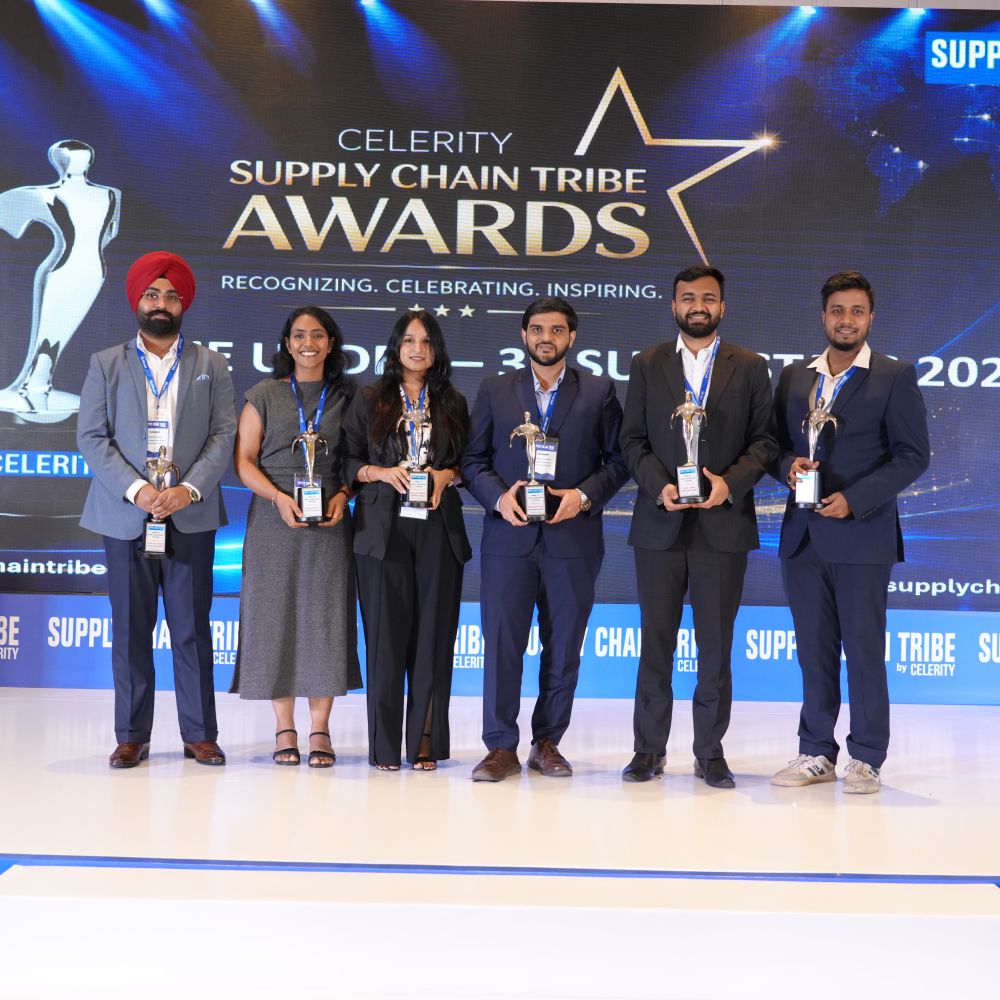
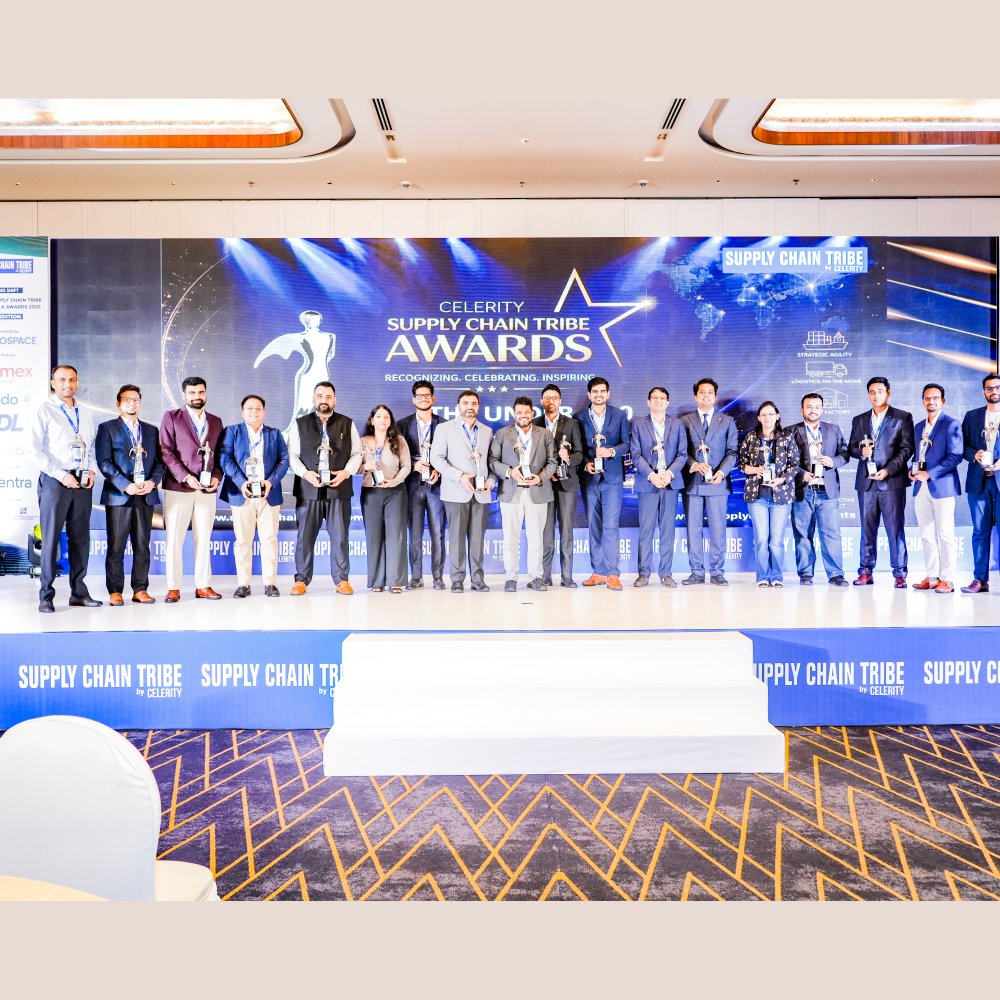
Viewed through this lens, the role of the Jury of the Celerity Supply Chain Tribe Under-40 Awards extends well beyond evaluating achievements. Comprising accomplished business leaders with decades of collective experience across diverse industries and supply chain functions, the jury brings a discerning perspective on what truly distinguishes high potential professionals from high impact leaders. Their views are shaped not only by the organizations they have led, but also by the talent they have hired, mentored and developed through periods of transformation.
In this Cover Story, the esteemed jury members share their perspective on the capabilities that will define the next generation of business leadership—from navigating digital disruption and harnessing AI responsibly to building trust, cultivating resilience and developing future-ready talent. Together, their insights offer a strategic framework for organizations seeking to build stronger leadership pipelines and for professional aspiring to create influence that extends far beyond credentials.
As leadership expectations continue to evolve, what do you believe distinguishes high potential professionals from high impact leaders in today's business environment?
v
Arush Kishore, Vice President, Reliance Industries Ltd.: The true test of leadership has remained remarkably consistent: the ability to deliver outcomes that create lasting value. While potential is often recognised through capability and promise, impact is demonstrated through sustained execution. What has evolved is the expectation of what effective delivery entails. Business performance today is measured not only by efficiency, but also by safety, sustainability, agility and resilience.
For supply chain leaders, these expectations have become significantly more demanding. Technology adoption is no longer viewed as a future capability but as an operational imperative. The increasing frequency of geopolitical shifts, economic volatility and supply disruptions requires leaders who can rapidly translate technological advancements into business outcomes while strengthening organizational resilience. Leadership today is defined by the ability to adapt without compromising operational excellence.
Sanjeev Suri, SVP - Global Omni Channel Logistics, CS & North, Amway India: High-potential professionals excel at delivering results within their own area of responsibility. High-impact leaders create value far beyond their individual contributions by inspiring teams, fostering collaboration, and driving meaningful organizational change. The distinction, to me, is simple, high-potential professionals deliver outcomes, while high-impact leaders build a robust ecosystem for people to consistently deliver those outcomes effectively. At Amway, we strongly believe that leadership is about empowering people to succeed. Whether it's enhancing our customer experience, strengthening our supply chain, or driving innovation, our leaders are encouraged to think beyond functional boundaries and work collaboratively across markets and teams.
Sanjeev Suri
Importantly, in today's environment, high-impact leadership is also defined by adaptability and purpose. The pace of change in consumer behavior, technology, and business operations requires a leader who must stay agile, lead with clarity, and remain anchored to a larger purpose. Highimpact leaders don't simply execute, they create an environment where innovation, accountability, and customer focus become part of the culture. At the heart of it, high-impact leadership is measured not by what you achieve individually, but by the success you enable in others by empowering them and the lasting impact you leave behind.
Sukanta Das
Sukanta Das, President & Chief Logistics Officer, Hindalco Industries Ltd.: High-potential professionals excel because of what they know and how quickly they learn. High-impact leaders go a step further; they create an environment where others can perform at their best. They build trust, make difficult decisions with clarity, stay calm during uncertainty, and consistently put the team’s success ahead of personal recognition. In supply chains, especially, leadership is tested not when everything goes according to plan, but when it doesn’t. The leaders who make the biggest impact are those who can simplify complexity, inspire confidence, and keep people aligned when the pressure is highest.
Devendra Rawat, Head – Strategy & Special Projects, Huhtamaki India: The distinction is quite significant. High-potential professionals are exceptional at delivering results within their own domain, but high-impact leaders create success through others. They build teams that are aligned around a shared vision, foster collaboration across functions, and consistently translate strategy into business outcomes. What truly differentiates a leader is the ability to develop people while delivering performance. They create an environment where individuals are empowered to grow, take ownership, and contribute beyond their defined roles. Ultimately, the true measure of leadership is not just the results one delivers personally, but the number of capable future leaders one develops along the way. Sustainable organizations are built by leaders who multiply leadership.
Devendra Rawat
Sanjay Desai, Independent Director and Mentor: High-potential professionals excel in their specific areas. They're dependable, knowledgeable, and they deliver results. High-impact leaders, however, go further: they unite teams, make tough calls, and keep the business moving even when the path isn’t clear. In today’s fast-paced environment, leaders don’t wait for perfect data; they use judgment, connect insights, and bring people along with them. They are ready to take calculated risks and bring their learnings from their past. I've seen these traits being taught very early at companies like Unilever. The senior leaders treated sustainability as part of everyday operations, not a paper project or lip service. That kind of long-term, decisive thinking is what sets true leaders apart.
Sanjay Desai
Supply chains are becoming increasingly digital and interconnected and unpredictable. What leadership capabilities will be most critical for navigating the next decade?
Arush Kishore: The interval between major disruptions—once considered exceptional events—continues to narrow. Supply chains now operate in an environment where uncertainty has become a structural reality rather than an occasional challenge. Leadership over the next decade will demand an enduring commitment to learning and the ability to accelerate the adoption of emerging technologies. Operational discipline, efficiency and strategic clarity will remain fundamental differentiators. Successful leaders will also be measured by their ability to align organisations behind a common direction, enabling teams to respond with speed while remaining focused on long-term objectives. Agility and resilience will increasingly define leadership effectiveness.
Sanjeev Suri: The supply chains of tomorrow will require leaders who can seamlessly combine technology, data, and human judgment. Digital tools, AI, and automation will continue to transform operations, but leadership will remain essential in making informed decisions during uncertainty. Technology can process information, but it is human judgment that provides context, empathy, and foresight and that balance will define the next decade of supply chain leadership.
At Amway, we are continuously investing in digital transformation to create a more agile and connected supply chain while enhancing the experience for our distributors and their customers. As part of this journey, we have introduced AI-driven capabilities, including our first intelligent chatbot and process automation solutions, enabling faster resolutions, greater operational efficiency, and improved user experiences. Looking ahead, we plan to further integrate AI to deliver hyper-personalized support and enable more data-driven decision-making. But technology alone is not enough, its true value is unlocked only when guided by the right leaders who embrace innovation, make data-driven decisions, anticipate disruptions, and build resilient operations while keeping the customer at the center of every decision.
Sukanta Das: The future will demand leaders who are equally comfortable with technology and people. Digital tools and AI will improve decision-making, but leadership will continue to be about judgment, collaboration, and execution. Leaders will need systems thinking to understand interconnected networks, resilience to navigate disruptions, the courage to make timely decisions with imperfect information, and the humility to continuously learn. Above all, they must be able to bring diverse teams together around a shared purpose because no supply chain challenge is solved in isolation.
Devendra Rawat: The next decade will demand leaders who are comfortable operating in an environment defined by constant change and increasing complexity. Adaptability, systems thinking, data-driven decision-making, and the ability to lead through uncertainty will become fundamental leadership capabilities.
Digitalization, AI, automation, and advanced analytics are rapidly reshaping supply chains, but technology alone does not create competitive advantage. Leaders must possess the digital fluency to understand where these technologies create meaningful business value while also bringing together diverse stakeholders to drive organization-wide adoption. The ability to balance technology with collaboration, agility, and strategic thinking will determine how effectively organizations build resilient, responsive, and future-ready supply chains.
Sanjay Desai: The future of current supply chains will demand leaders 1) who are comfortable with digital tools and 2) skilled at managing people across borders. You don’t need to be a techy expert, but you must understand what the data is telling you and how to turn raw data into smart analytics for quick decisions. Today, teams are often spread across countries and cultures. As a leader, you need to work across different countries, cultures and time zones challenges to connect with people, provide direction, and ensure alignment for business sustainability. Mr. Satya Nadella is a good example. He drove digital transformation while fostering a culture where people felt heard and respected, a combination that proved successful.
As someone assessing emerging talent, what qualities or behaviours consistently stand out among future leaders?
Arush Kishore: Leadership fundamentals rarely change, irrespective of technological progress. Integrity, respect, ownership, commitment to excellence and an unwavering focus on customer value continue to distinguish individuals with long-term leadership potential. Organisations frequently invest in systems and processes, yet culture ultimately determines whether those investments generate meaningful outcomes. Future leaders must therefore create environments that encourage learning, embrace change and support continuous improvement. An organisation's ability to adapt will increasingly depend on leaders who can cultivate a culture aligned with both immediate execution and long-term strategic priorities.
Sanjeev Suri: Technical competence is the starting point, not the destination. What consistently stands out is curiosity, ownership, and a willingness to learn beyond one's defined role. Future leaders actively seek feedback, embrace challenges, collaborate across diverse teams, and demonstrate integrity in both decisions and actions. They don't want to be told what to do, but identify opportunities, take initiative, solve problems proactively, and hold themselves accountable for outcomes. It is this sense of ownership that sets future leaders apart from the rest.
Equally important is emotional intelligence, the ability to lead with empathy, listen actively, and bring people along, especially in moments of change or uncertainty. Increasingly, the leaders who stand out are those who can balance the confidence to drive results with the humility to keep learning. Perhaps the most valuable quality is a mindset of continuous learning. In a rapidly changing world, the ability to unlearn, relearn, and adapt will define leadership success. At Amway, we consciously encourage people to take ownership, experiment, and grow, because the leaders of tomorrow are built by the culture we create today.
Sukanta Das: The people who consistently stand out are those who remain curious, take ownership beyond their defined role, and demonstrate the willingness to learn from both success and failure. I also value individuals who ask thoughtful questions, collaborate across functions, and show genuine respect for people at every level of the organization. Technical competence opens doors, but attitude, integrity, and consistency determine how far someone goes.
Devendra Rawat: The qualities that consistently distinguish future leaders are curiosity, learning agility, ownership, analytical thinking, and the ability to influence without relying on formal authority. These individuals actively seek opportunities to learn, question established ways of working and continuously expand their capabilities.
What impresses me most is a proactive mindset. Future leaders do not simply identify problems—they take initiative to solve them. They demonstrate a strong bias for action while keeping the larger organizational objective in perspective. They are equally comfortable working with data, collaborating across teams, and making thoughtful decisions in ambiguous situations. Above all, they display accountability and the willingness to step outside their comfort zone to create impact.
Sanjay Desai: As a P&L manager overseeing multiple regions for over 30 years, I’ve seen three themes consistently 1) Curiosity, 2) Ownership, and 3) Ability to work across teams.
Leaders who are inquisitive and passionate ask questions and challenge the status quo professionally. They don’t wait for perfect clarity; they take ownership and act based on their experience and instinct. Today we know that success in supply chains depends on working across procurement, R&D, quality, marketing, logistics, and finance for achieving corporate goals. A good example is GE, where speed of work is determined by team collaboration rather than working in silos.
AI and automation are reshaping the workplace. Which human skills do you believe will become even more valuable as technology advances?
Arush Kishore: Centuries ago, René Descartes observed, “I think, therefore I am”. That principle remains profoundly relevant in an era shaped by artificial intelligence. The ability to question assumptions, frame complex problems, exercise sound judgement, demonstrate empathy and place information within the appropriate context will continue to distinguish human leadership. Creativity expressed through ideas, language, design, art, music and innovation remains uniquely human and continues to create enduring value.
Within organisations, these capabilities assume even greater strategic significance. Leadership will increasingly involve establishing guardrails for AI adoption, challenging outputs where necessary and providing the judgement required to guide technology towards meaningful business outcomes. Strategic thinking and human insight will remain indispensable.
Sanjeev Suri: As technology automates routine tasks, uniquely human capabilities become even more important. In many ways, the rise of AI is not diminishing the value of human skills, it is amplifying them. Critical thinking, emotional intelligence, creativity, ethical judgment, communication, and relationship-building will continue to distinguish exceptional leaders. AI can process vast amounts of information, but it cannot replace empathy, inspire trust, or lead people through uncertainty. Nor can it replicate the wisdom to ask the right questions, the moral compass to make the right choices, or the ability to bring people together around a shared purpose. The leaders of tomorrow will not compete with AI; they will learn how to collaborate with it while amplifying the human qualities that technology cannot replicate.
Sukanta Das: As AI becomes better at processing information, uniquely human capabilities become even more important. Empathy, critical thinking, ethical judgment, creativity, communication, and the ability to influence without authority cannot be automated. Technology can recommend the best decision, but only people can build trust, manage conflict, inspire teams, and make balanced decisions when multiple stakeholders are involved. The future belongs to leaders who know how to combine human judgment with technological capability.
Devendra Rawat: As AI becomes deeply embedded across business functions, the first essential skill will be AI and data fluency—the ability to understand how data can be translated into business value and where technology can genuinely improve decision-making and performance. Equally important, however, are the distinctly human capabilities that technology cannot replicate. Critical thinking, creativity, emotional intelligence, ethical judgment, and the ability to build trust will become even more valuable. As automation increasingly takes over routine and transactional activities, human differentiation will lie in solving complex problems, fostering collaboration, inspiring people, and driving innovation responsibly. The future belongs to professionals who can combine technological understanding with human-centered leadership.
Sanjay Desai: Let me start by saying technology isn’t everything. It’s a tool that needs to be understood and implemented correctly with the right people and framework. Over past three decades, I’ve seen many IT projects fail when people and processes weren’t aligned. Machines can process data, but people design systems, write programs, and manage change. Automation is more about people skills and change management than on technology itself. Companies like IBM have shown that even with strong technology, a focus on user experience, empathy and a true human touch makes all the difference.
What is the biggest talent challenge organizations must address to build resilient and future-ready leadership pipelines?
Arush Kishore: One of the defining talent challenges lies in combining digital fluency with institutional wisdom. Organisations require leaders who are comfortable leveraging data and artificial intelligence while possessing the judgement developed through managing complex operations across multiple business cycles. As experienced leaders transition from the workforce, preserving decades of operational knowledge becomes increasingly important. Building leadership pipelines that successfully integrate technological capability with practical experience will determine how effectively organisations navigate future uncertainty.
Sanjeev Suri: One of the biggest challenges is preparing leaders who can continuously adapt rather than simply excel in today's environment. Organizations must provide cross-functional exposure, encourage innovation, and create opportunities for experiential learning. Future leaders need to understand the broader business ecosystem instead of operating within functional silos.
At Amway, we strongly believe in nurturing talent, and investing in continuous learning and development of our employees throughout their career journey. Leadership development is not viewed as a one-time intervention but as a continuous process of learning, mentoring, capability building, and creating opportunities for growth. We actively encourage collaboration across operations, customer experience, technology, and commercial teams because the best solutions emerge when diverse perspectives come together. By exposing employees to real business challenges, empowering them to make decisions, and fostering a culture of continuous learning, we are building resilient leaders who are equipped to navigate the future with confidence. Because in the end, an organization’s ability to stay future-ready depends entirely on the strength and adaptability of the people who lead it.
Sukanta Das: The biggest challenge is preparing leaders for uncertainty rather than preparing them only for predefined roles. Organizations need to provide broader cross-functional exposure, encourage calculated risk-taking, and create opportunities for emerging leaders to solve real business problems early in their careers. Equally important is investing in coaching and mentoring because leadership develops through experience, reflection, and feedback – not classroom training alone.
Devendra Rawat: One of the biggest challenges is preparing leaders who can continuously evolve rather than simply excel within today's operating environment. The pace of technological advancement and business disruption means that leadership capabilities can no longer remain static.
Organizations need to move beyond traditional succession planning and create deliberate pathways that expose future leaders to cross-functional experiences, diverse business challenges, and digital transformation initiatives. Equally important is nurturing a culture of continuous learning, experimentation, and adaptability. Leadership pipelines should not merely identify successors—they should continuously develop leaders who are equipped to navigate uncertainty, embrace change, and lead organizations through future disruptions.
Sanjay Desai: The biggest challenge is building strong, diverse teams throughout the organization. Without it, organizations risk repeating the same mistakes they made in the past. You need diversity in gender, functions, qualifications, technical skills, and experience, which enhances decisions and reduces blind spots. Some companies, like Salesforce, have invested in mentoring and structured development, helping them to create a bench strength of future ready managers.
As leadership continues to evolve, what should today's young professionals start doing now to prepare for the challenges and opportunities that will define the next decade?
Arush Kishore: The coming decade will be characterised by sustained technological advancement and continuous business transformation. Success will belong to professionals who embrace learning as a lifelong discipline and remain adaptable in the face of constant change. Empathy, sustainability and intellectual curiosity will become defining leadership attributes alongside technical expertise. The ability to learn, unlearn and apply new knowledge with speed will shape future leadership more than conventional experience alone. Supply chain professionals have consistently demonstrated resilience through periods of disruption, and the next generation is well positioned to lead the transformation of increasingly intelligent, agile and sustainable value chains.
Sanjeev Suri: My advice is simple: Stay Curious, Stay Humble, And Never Stop Learning. Build expertise, but don't limit yourself to one domain. Understand technology, business, customer expectations, and the broader ecosystem in which your organization operates. Develop strong communication skills, cultivate resilience, and always seek opportunities to solve meaningful problems. Most importantly, focus on building trust. Careers are built on competence, but leadership is built on credibility, character, and the ability to positively influence others.
The next decade will reward professionals who embrace change with optimism, continuously upgrade their skills, and lead with purpose. Those who combine technical excellence with genuine commitment to people and customers will shape the future of business. My belief is that the most successful leaders of tomorrow will not just be those who achieve the most, but those who lift others as they rise.
Sukanta Das: Don’t chase job titles – build capabilities. Stay curious, keep learning, embrace technology, and seek experiences beyond your comfort zone. Build relationships across functions, understand the business end-to-end, and develop the habit of solving problems rather than merely identifying them. Most importantly, build your reputation on integrity and reliability. Skills may get you your next opportunity, but character determines whether people will trust you with leadership.
Devendra Rawat: Young professionals should view learning as a continuous journey rather than a milestone. Investing in new skills, seeking diverse experiences, embracing emerging technologies, and working across functions will help build both competence and perspective. At the same time, technical expertise alone is no longer sufficient. Strong collaboration, effective communication, and the ability to influence diverse stakeholders are becoming equally important. Most importantly, professionals must cultivate the mindset to learn, unlearn, and relearn
Centuries ago, René Descartes observed, “I think, therefore I am”. That principle remains profoundly relevant in an era shaped by artificial intelligence. The ability to question assumptions, frame complex problems, exercise sound judgement, demonstrate empathy and place information within the appropriate context will continue to distinguish human leadership. Creativity expressed through ideas, language, design, art, music and innovation remains uniquely human and continues to create enduring value.throughout their careers. In a world where change is constant, adaptability will remain the defining leadership trait, and those who remain curious, resilient, and open to continuous reinvention will be best positioned to lead the future.
Sanjay Desai: Great question. The young professionals must do something today to prepare for tomorrow.
First and foremost, listen well, understand what you hear, and learn from others. Apart from academics and training courses, most learning (about 70%) happens on the job. To make this possible, you need to develop listening skills, patience, and the desire to take one step at a time. Leadership is a marathon, not a sprint.
Second, cultivate flexibility and patience. In today’s rapidly changing world, roles change, companies merge, and new business structures form. If you’re too rigid, you might miss opportunities that come in various forms.
Lastly, build both hard and soft skills. Understand data, systems, and technology, but also learn how to communicate, influence, and collaborate with people at all levels. At the end of the day, we all work with people, and they work with others, creating an ongoing chain of collaboration
I strongly feel that those who remain open, keep improving, and take ownership will thrive, no matter what changes come.


 Categories