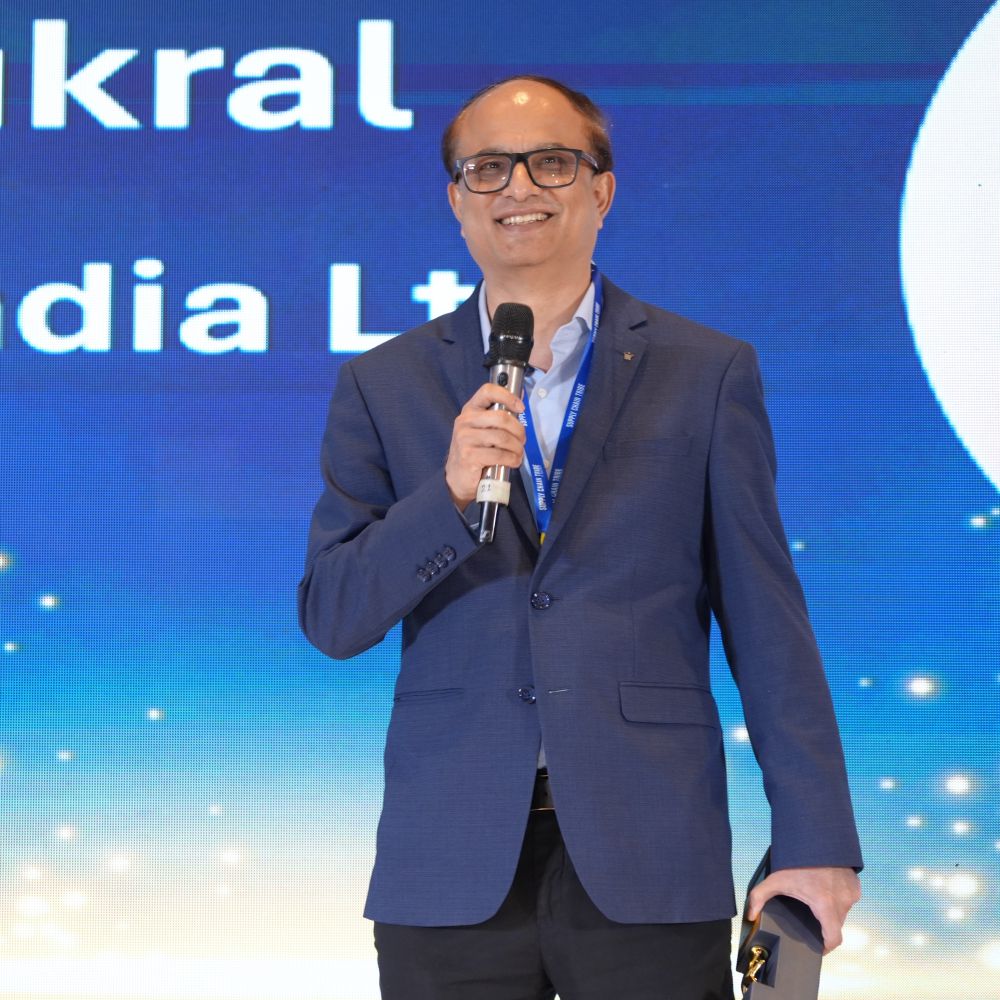
In a business landscape where complexity rarely announces itself clearly, curiosity becomes a defining leadership advantage. It is the drive to question the obvious, look deeper into the data, and welcome perspectives that challenge established thinking. For Deepak Thukral, Sr. Executive Officer, Supply Chain Maruti Suzuki India Ltd., curiosity is deeply tied to discipline—asking the right questions, unearthing the story behind the numbers, and translating insights into sharper decisions and stronger execution. By combining structured thinking with adaptability, his approach demonstrates that continuous operational excellence begins with a simple commitment: to Listen, Learn, and Ask how to do things better.
After a career of sustained achievement, what would you describe as your personal success mantra—and how has it evolved with experience?
My personal success mantra has always been simple: Early to Start is Early to Rise. I have always believed that the quality of our day is determined by how we begin it. Starting early, combined with disciplined sleep habits, gives me more productive hours, a clearer mind, and the energy to continuously learn and improve.
Over the years, experience has taught me that success is rarely achieved through a single path. While it is important to have a clear Plan A, effective leaders must also be prepared with Plan B and Plan C. The ability to learn from past experiences, anticipate challenges, and change gears when circumstances demand is what helps navigate uncertainty while remaining focused on the end goal. As responsibilities grow and the business environment evolves, my mantra has expanded beyond discipline to include adaptability and resilience.
Is there a book that has had a lasting influence on the way you think or lead? Is there a particular idea from it that you have consciously brought into your own life or leadership?
One book that has had a lasting influence on me is Ikigai. Its central idea of finding purpose by aligning passion, capability, contribution, and value resonates deeply with me. Equally inspiring are the teachings from our Hindu epics such as the Bhagavad Gita, which emphasize performing one’s duty with sincerity, continuous self-improvement, and focusing on actions rather than being driven solely by outcomes.
Together, these philosophies have shaped my approach to leadership and life. Ikigai highlights the importance of finding meaning in what we do, while the Bhagavad Gita teaches resilience, discipline, and steadfastness in the face of challenges. I believe people perform at their best when they connect their individual contributions to a larger purpose, remain committed to learning, and embrace change with a positive mindset.
Mentors can shape a leader long after a particular chapter has ended. Which mentor or influence has had a lasting impact on you, and what aspect of their thinking continues to stay with you?
I have been fortunate to learn from many remarkable leaders throughout my career, but one individual who has had a profound influence on me is R.C. Bhargava Sir. What makes his leadership truly inspiring is the bold vision he pursued at a time when owning a car in India was considered a luxury reserved for a few. The lesson that continues to stay with me is the power of a vision that serves a larger purpose. Great leaders do not just respond to current needs; they anticipate future possibilities and create opportunities that benefit generations.
R.C. Bhargava Sir's ability to combine a clear vision with execution, affordability, and customer focus is a reminder that true leadership is about creating lasting impact and driving meaningful change at scale.
You have led across generations with very different expectations of work, purpose and success. How do you adapt your leadership to connect with younger professionals while allowing them the space to bring their own strengths and perspectives?
Having young minds in the team brings fresh energy, new perspectives, and it’s quite interesting to see their way of approach towards challenges. I genuinely enjoy interacting with young professionals because with every conversation I learn something new. What stands out about this generation is their natural comfort with technology and their ability to adopt new tools and solutions seamlessly. They are far more quick in exploring new technologies and finding innovative ways to complete their work. Watching how effortlessly they integrate these advancements into their work is both impressive and inspiring.
I believe leadership is a two-way learning process, my role is not to tell them exactly how things should be done, but to provide direction, create opportunities, and give them the space to experiment and grow. The key is to build an environment based on trust and openness, where ideas can flow freely. When experience and fresh perspectives come together, teams become stronger and better prepared for the future.
As a new generation of leaders enters positions of greater responsibility, what qualities do you believe will become increasingly important—and which qualities remain timeless?
If there is one quality I would encourage every professional to develop, it is the habit of asking questions. Whenever in doubt, ASK. Continuous learning begins with curiosity, and every meaningful improvement starts by seeking a deeper understanding of the issue at hand. Looking back on my own journey, many of my most valuable learnings came from asking the right questions. Going beyond the obvious to understand root causes often reveal better solutions and new opportunities for growth.
As a new generation of leaders takes on greater responsibility, the ability to combine curiosity with technology will become increasingly important. While curiosity remains a timeless quality, young professionals today have the advantage of leveraging AI and digital tools to explore issues more deeply, learn faster, and make better-informed decisions. The right questions, supported by new ways of working, can become powerful drivers of innovation, continuous improvement, and long-term success.
The business environment continues to change at remarkable speed. What do you do personally to remain open to new ideas, new ways of working and perspectives that may be very different from your own?
In a business environment that is constantly evolving, I always try to actively listen and seek feedback from my peers. I try to make conscious effort to pay attention while interacting with colleagues across different generations. Every generation brings its own strengths, whether it is experience, technological expertise, or a fresh way of looking at challenges. By listening with an open mind, I often discover new approaches that I may not have considered otherwise.
I also see feedback as an essential tool for continuous improvement. It helps us challenge our assumptions and improve the way we work. The moment we believe we have nothing left to improve is the moment we stop growing. Active listening, curiosity, and openness to feedback have helped me remain adaptable throughout my journey, and I believe they will continue to be critical qualities for future leaders as well.
Having worked with people across different generations and personalities, what do you look for beyond credentials when you recognise someone with the potential to lead?
What stands out most is for me in an individual is his/her dedication and the inner motivation to go beyond conventional standards and that gets reflected in their work. Skills can be learned, experience can be gained, and leadership capabilities can be developed over time, but genuine commitment to one's work comes from within.
I believe that people who truly enjoy what they do are naturally driven to learn more, take ownership, and continuously raise the bar for themselves. They do not settle for ‘good enough’. Instead, they are always looking for ways to improve. ‘How can I make it even better’, that’s a great attitude to have.
For me, the strongest indicator of future leadership is the ones who have genuine enthusiasm for their work and a willingness to push beyond perceived limits. When that inner drive is present, all other leadership qualities can be nurtured and refined over time.
Over the years, has there been a leadership practice or principle that has become so integral to the way you work that it now comes almost instinctively?
Over the years, one principle that has become a nature to me is being organized and systematic in everything I do. A philosophy that has greatly influenced my approach is 5S, the Japanese methodology centred on workplace organization and discipline. What began as a workplace practice gradually became a way of thinking.
Equally important is the ability to understand the story behind the data. I strongly believe that leaders must grasp the key numbers, analyse trends, and draw meaningful conclusions before making decisions. Data provides direction, while a systematic approach ensures effective execution. With experience, I have realized that leadership is often about simplifying complexity. Combining structured thinking with data-driven decision-making helps minimize uncertainty, improve outcomes, and build confidence across teams. This simple habit, practiced consistently over time, has helped me drive better execution, stronger teamwork, and sustainable results
What interests outside business continue to hold your attention, and have any of them influenced the way you approach your professional life?
One interest outside of business that continues to hold my attention is Cricket. Beyond being a sport, it has shaped many of my perspectives on leadership and teamwork. Cricket teaches the importance of strategy, adaptability, and collective effort. Every match presents different conditions and challenges, requiring teams to assess situations quickly, adjust their approach, and stay focused on the ultimate objective. It also reinforces the value of trust, where individual excellence contributes to, but never outweighs, team success.
Having experienced leadership across several decades, what is one perspective you believe the next generation would benefit from carrying forward—and what would you encourage them to define for themselves?
If there is one perspective I would encourage the next generation to carry forward, it is the ability to accept constructive criticism with an open mind. I understand that, coming from someone in a leadership position, it may sound easier said than done. However, there was a time when I too was new to the industry, learning the ropes and finding my way. Looking back, some of my biggest lessons came from feedback and criticism. At times, it was not always easy to hear, but I chose to view it as an opportunity to learn rather than a setback.
Constructive criticism, when received with the right mindset, becomes a powerful tool for growth. It accelerates learning, builds resilience, and helps us see perspectives that we might otherwise overlook. At the same time, I would encourage the next generation to define success for themselves. Every individual has a unique journey, ambition, and purpose. The combination of humility to learn and confidence to chart your own path is what ultimately shapes impactful leaders.
As a new generation of leaders takes on greater responsibility, the ability to combine curiosity with technology will become increasingly important. While curiosity remains a timeless quality, young professionals today have the advantage of leveraging AI and digital tools to explore issues more deeply, learn faster, and make better-informed decisions. The right questions, supported by new ways of working, can become powerful drivers of innovation, continuous improvement, and long-term success.


 Categories