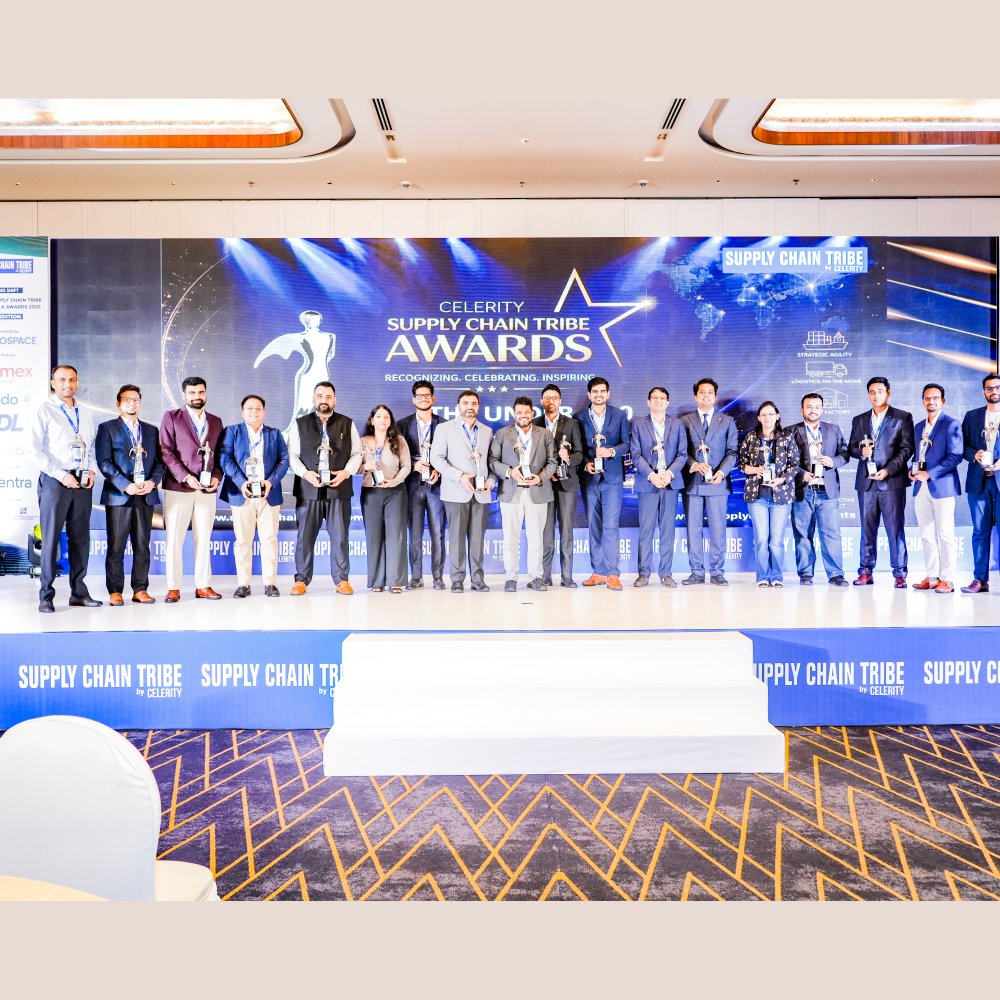
Every era is defined by the leaders who dare to challenge convention. In today's rapidly evolving supply chain landscape, innovation is no longer confined to breakthrough technologies or billion-dollar investments—it is equally about reimagining everyday processes, questioning long-held assumptions, and finding smarter ways to solve complex business challenges. The ability to transform constraints into opportunities has become the hallmark of exceptional leadership, creating lasting impact across organisations and industries.
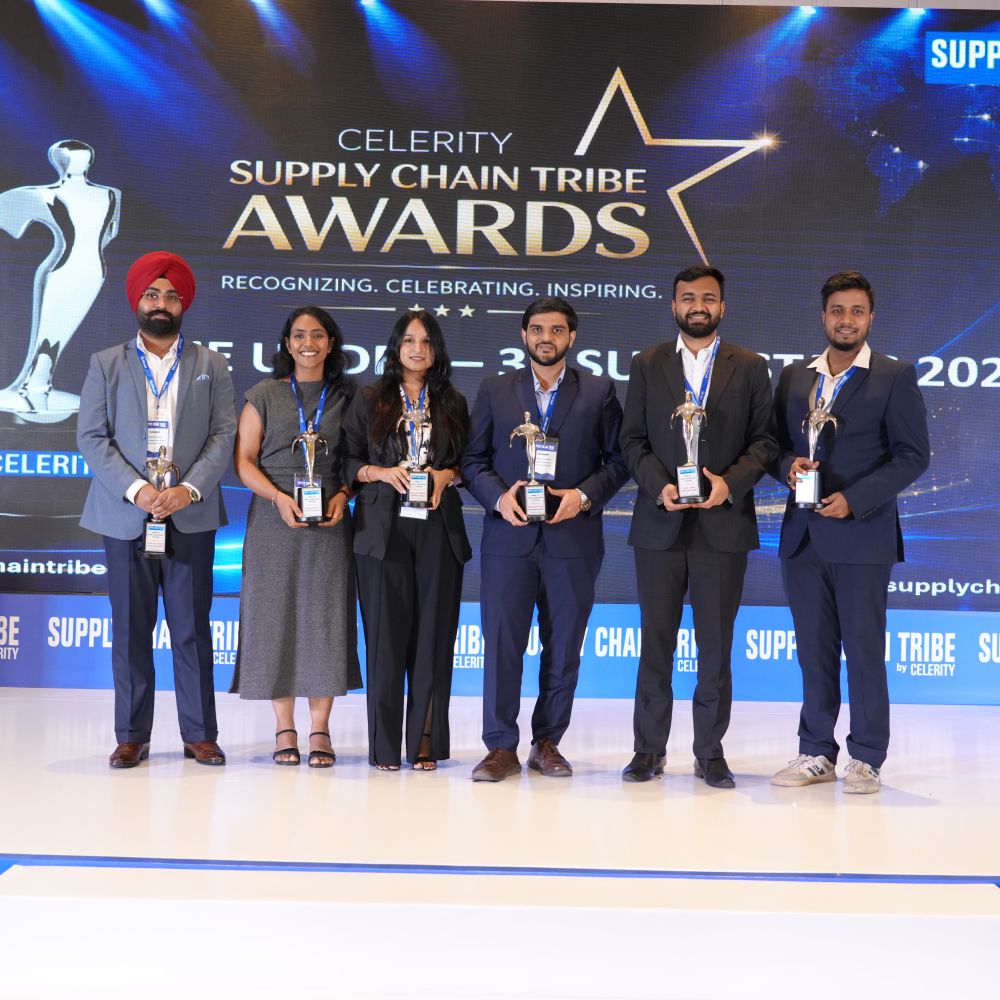
The Celerity Supply Chain Tribe Under 40 Award winners embody this new generation of changemakers. Representing diverse industries and disciplines, they have challenged established norms, transformed complex business problems into opportunities, and delivered innovations that have redefined procurement, manufacturing, planning, warehousing, logistics, customer fulfilment, and digital transformation. Whether through AI-powered decision-making, intelligent automation, sustainable sourcing, predictive analytics, or breakthrough process redesign, their initiatives have strengthened organisational resilience while driving efficiency, growth, and long-term competitiveness.
The following profiles celebrate these exceptional leaders and the innovations they have championed. More than individual success stories, they offer a glimpse into the future of supply chains—one where bold thinking, collaboration, and relentless execution continue to shape smarter, more agile, and more sustainable enterprises.
Abhilash Deori
Abhilash Deori, Sr Technical Program Manager, Amazon - Driving AI-Led Innovation in Supply Chain
Through my work at Amazon and my academic background in Supply Chain Management from the University of Washington, I have focused on applying artificial intelligence, advanced analytics, simulation, and technical program leadership to solve complex supply chain and fulfilment challenges at scale.
At Amazon, I have led and contributed to large-scale supply chain and fulfilment programs that require close coordination across engineering, science, product, operations, and business teams. My role involves identifying high-impact operational problems, defining product and program strategy, translating business requirements into scalable technical solutions, and driving execution from concept through implementation and adoption.
A central focus of my work has been the use of AI-enabled decision-making to improve how supply chain teams plan, evaluate, and respond to complex operational scenarios. By combining AI, simulation, and advanced analytics, I have helped develop approaches that enable teams to assess fulfilment strategies, resource allocation, network configurations, operational constraints, and potential risks before implementation. These capabilities support faster, more proactive, and more informed supply chain decisions.
Beyond individual programs, I have worked to establish scalable mechanisms, strengthen governance, improve technical and analytical workflows, and create alignment across scientific, engineering, product, and operational teams. These efforts have supported improved planning accuracy, better resource utilisation, stronger operational resilience, and more efficient execution across complex supply chain environments.
I also contribute to advancing AI and supply chain knowledge through technical communities, knowledge-sharing forums, and collaboration between industry practitioners and academic experts. These initiatives help bring together scientists, engineers, supply chain professionals, and researchers to explore emerging applications of AI, simulation, analytics, and automation in modern supply chains.
Alongside my industry work, I actively contribute to scholarly research at the intersection of artificial intelligence, supply chain, and emerging technologies. I have authored and co-authored multiple research papers accepted at IEEE conferences, including work on AI-driven supply chain decision-making, reinforcement learning for supply chain optimisation, disruption prediction, agentic AI in retail, and other applications of intelligent systems to operational and supply chain challenges.
Together, these efforts reflect my focus on combining AI, supply chain expertise, technical program leadership, and product innovation to build scalable solutions that improve decision-making, efficiency, resilience, and performance across increasingly complex supply chain networks.
Abhinav Kalra
Abhinav Kalra, DGM, Energy In Motion Ltd. - Turning Scrap into Strategic Value
During my tenure at TEVCS (TACO Busbar), I led an initiative that challenged the conventional view of manufacturing scrap—not as waste, but as a valuable resource capable of delivering both commercial and environmental benefits.
Copper busbar manufacturing generated nearly 40% design scrap, while the complexity of battery pack designs, comprising multiple unique part numbers, limited opportunities for traditional nesting or design optimisation. Given the rising cost of copper, reducing material waste became a strategic business priority.
Instead of redesigning components, I reimagined the material lifecycle. I conducted a detailed analysis of generated scrap and introduced a "Scrap-to-Source" model, where precision laser cutting was used to recover usable material from larger offcuts for manufacturing smaller components. This required synchronising production planning and the supply chain so that scrap from primary manufacturing runs became the raw material for secondary part production, effectively creating a circular material flow within the plant.
The initiative fundamentally changed how manufacturing waste was managed, converting an unavoidable by-product into a productive input. It reduced dependence on virgin copper, improved material utilisation, and strengthened sustainability across the manufacturing process.
The project generated annual savings of ?2.35 crore, significantly reduced raw material procurement, and lowered the environmental impact associated with copper extraction and processing. More importantly, it demonstrated how circular supply chain thinking can simultaneously improve profitability, operational efficiency, and environmental stewardship.
Ankur Dekivadia,
Ankur Dekivadia, DGM – Supply Chain, Farmson Basic Drugs P Ltd - Scaling Efficiency Through Milk-Run Distribution
Servicing small and medium customers efficiently had become a growing challenge due to fragmented shipments, low order quantities, and high transportation costs. I saw an opportunity to redesign the distribution network to improve both operational efficiency and business growth.
I led the implementation of a Milk-Run Distribution Model (MilkVan Delivery) that consolidated multiple customer deliveries into predefined routes serviced by a single vehicle. The initiative began with a detailed Pareto analysis to identify high-frequency delivery corridors with the greatest optimisation potential. Based on these insights, I launched six dedicated routes, which were later expanded to cover 114 delivery locations. Fixed daily vehicle movements brought greater predictability, while the top 35 routes were prioritised as they contributed nearly 85% of part-load transportation volumes. I also established a monthly performance review mechanism to continuously optimise route efficiency and service levels.
The new model significantly improved vehicle utilisation, reduced logistics costs, and accelerated delivery cycles for small and medium customers. Consistent deliveries strengthened customer satisfaction while enabling faster inventory replenishment and improved service reliability.
Most importantly, the initiative unlocked nearly ?50 crore in incremental sales by making this customer segment commercially viable to serve. It transformed a fragmented distribution process into a structured, scalable, and data-driven logistics network that simultaneously enhanced efficiency, customer experience, and business growth.
Bhupender Negi
Bhupender Negi, Sr Manager Procurement – Commodities, Nestle India Ltd. - Transforming Agri-Commodity Procurement from Farm to Factory
I led the transformation of procurement for critical agri-commodities such as wheat flour and sugar by building a farm-to-factory model integrating cost intelligence, supplier capability, product quality and sustainability. The objective was to create structural cost advantage while building a more resilient Indian supply ecosystem.
I worked cross-functionally across R&D, Product Development, Quality, Manufacturing and Supply Chain to align recipes, product specifications and raw-material characteristics, enabling product uniformity despite highly localised and variable agricultural inputs. I developed should-cost models, widened the vendor base through e-auctions and competitive sourcing, and addressed supply-chain choke points including MSME financing, hyperlocal logistics and on-ground supplier development.
I also helped Indian MSMEs and producer networks upgrade capabilities to meet global standards, compliance and technology requirements, improving quality consistency while strengthening long-term supply resilience.
The transformation delivered nearly 10% savings across key procurement categories, while sustainable sourcing programmes covered almost 50,000 MT, with interventions across water stewardship, soil health and carbon reduction. Hyperlocal supply models further unlocked logistics efficiencies.
The resulting raw-material cost advantage created room to reinvest savings into marketing, affordability and deeper market penetration, linking procurement directly to consumer growth.
By integrating commercial excellence, capability building and sustainability, I helped transform procurement from a transactional function into a strategic lever for growth, resilience and value creation across the agricultural ecosystem.
Chandan Gupta
Chandan Gupta, Head of Supply Chain – India, Estee Lauder Companies - Unlocking Working Capital Through Strategic Planning and Stronger Collaboration
At ELC India, I led a supply chain transformation to partner with all commercial functions to address the fundamental challenge of unlocking significant working capital which was getting locked into excess and obsolete inventory, while limited demand visibility and inefficiencies across the order-to-delivery cycle were affecting both cash flow and service responsiveness. With a portfolio of more than 4,000 SKUs, improving inventory performance required more than simply reducing stock—it required changing how the organization partnered, planned and made decisions.
I institutionalized Integrated Business Planning (IBP) to bring demand, supply and financial plans together and create a common, forward-looking view of the business. I also drove automation across demand planning, order management and logistics, while working closely with Sales, Finance and Operations to strengthen cross-functional ownership and planning discipline.
A key focus was creating greater visibility into inventory health and enabling proactive intervention. We introduced structured mechanisms for monitoring ageing and excess inventory, strengthened PO tracking and deduction management, and developed targeted liquidation strategies. These interventions helped shift the organization from reacting to inventory issues to anticipating them and taking action earlier.
The transformation delivered a 32% reduction in service lead time, 24% improvement in forecast accuracy across 4,000+ SKUs and sustained fill rates of over 92%. It also significantly reduced obsolete inventory and unlocked working capital.
More importantly, I helped establish a scalable operating model in which inventory, service and financial outcomes were considered together rather than in isolation. The strengthened cash flow and customer responsiveness while creating greater planning maturity and a stronger foundation for ELC India's growth and localization strategy.
Chirapravo Ghosh
Chirapravo Ghosh, Procurement Lead, Nestle India Ltd. - Reimagining the Visicooler Value Chain
Supporting Nestlé India's ambitious retail expansion required a fundamental rethink of how visicoolers were deployed across the country. I was part of the core team that led the redesign of the end-to-end value chain to create a faster, leaner, and more scalable deployment model.
The traditional process relied on a Capex model where visicoolers moved from the manufacturer to Nestlé's plants and distribution centres before reaching retail outlets. Multiple handling points increased lead times to six to eight weeks, drove up storage and transportation costs, and exposed the business to higher damage liability and working capital requirements.
The process was re-engineered by introducing a direct-to-retail deployment model, eliminating unnecessary distribution centre movements. The transformation was complemented by a digital asset management platform that enabled technicians to manage deliveries, installations, servicing, repairs, and lifecycle tracking seamlessly across the country. Successful implementation required close collaboration across procurement, supply chain, business teams, service partners, and the manufacturer to ensure uninterrupted deployment.
The redesigned model generated around 5% in direct operational savings. Faster deployment also enabled the rollout of 4X number of visicoolers in 2025, with a roadmap to scale to 5X units in 2026. The initiative established a scalable deployment model that improved market responsiveness, strengthened retail presence, and significantly enhanced supply chain efficiency.
The initiative transformed simulation into a strategic planning capability, enabling proactive network design, improved resource utilisation, and faster, data-driven decision-making. It reduced operational inefficiencies, enhanced planning accuracy, and strengthened cross-functional collaboration, establishing a scalable framework that continues to improve fulfilment network performance in an increasingly complex supply chain environment.
Dharmendra Upadhyay
Dharmendra Upadhyay, National Logistics Head, Dabur India Ltd. - Building a Culture of Tech-Enabled Logistics Kaizens
I believe digital transformation delivers lasting impact only when it becomes part of an organization's culture with high adoption. With this vision, I led the creation of technology-enabled Digital Kaizen framework across Dabur's logistics network, enabling frontline teams to continuously identify, own and implement improvements to optimise our day-to-day activities.
At the time, several logistics processes relied on manual, paper/mail-based workflows, creating inefficiencies and lacking visibility & controls. Objective was to standardize and drive adoption across 28 distribution centres while ensuring uninterrupted operations.
However, the true innovation extended beyond individual automation initiatives and logistics managers/executives were encouraged to identify operational pain points, build business cases, and partner with IT teams to implement scalable solutions. This shifted ownership of innovation closer to operations and created a sustainable pipeline of continuous improvement initiatives across the network.
Working closely with IT, Finance and business teams, multiple digital Kaizens were implemented, including automated stock returns, picklist enhancement & optimisation, Digitisation of customer claims integrated with proof-of-delivery, automation in Stock audit process, intelligent stock allocation, insurance claims tracking mechanism and integrated SAP ERP-linked portals & workflows for multiple critical activities.
The program delivered 20–30% productivity gains across multiple logistics processes, reduced manual efforts & errors, improved visibility and governance, and embedded continuous innovation into everyday operations.
More importantly, the programme demonstrated that meaningful supply chain innovation does not always require large capital investments or transformational technology programmes. By embedding continuous digital innovation into everyday operations and empowering teams to drive change from within, simple yet scalable and sustainable model for excellence can be delivered.
Dipali Bangar
Dipali Bangar, GM – Digital Transformation, Plan & Move, Diageo India - Project QRious: Reinventing Batch Traceability
I led Project QRious, a frugal digital innovation that transformed batch traceability at Diageo's Kumbalgodu manufacturing unit by delivering Warehouse Management System capabilities without the need for significant capital investment.
The existing batch management process depended on manual tracking and Excel-based controls, leading to inventory mismatches, inconsistent FIFO adherence, limited traceability, and compliance risks. While a full-scale WMS could have addressed these issues, it was not commercially viable.
To overcome this challenge, I designed a QR-enabled batch management solution fully integrated with SAP workflows. Every finished goods batch was digitally tagged using case-level QR codes, while QR scanning became an integral part of invoicing supplychaintribe.com COVER STORY 15
and dispatch processes. Automated batch validation, system-driven FIFO compliance, and a centralised digital repository created complete visibility from production to dispatch. The implementation was achieved with minimal disruption through close collaboration across manufacturing, warehousing, digital transformation, and IT teams.
The initiative achieved 100% batch traceability, virtually eliminated mismatches between physical and system inventory, significantly strengthened inventory governance, improved audit readiness, and delivered real-time operational visibility. Most importantly, it successfully replicated WMS-grade capabilities through a highly cost-effective digital solution.
Manoj Kandpal
Manoj Kandpal, Senior Vice President, Matter Motor Works P Ltd. - Driving Capital Efficiency Through Procurement Governance
At Matter Motor Works, I encountered a challenge common to high-growth startups—balancing limited capital against competing business priorities without compromising innovation or execution. As we progressed towards launching and scaling India's first geared electric motorcycle, it became essential to ensure every procurement decision delivered maximum business value.
Cash inflows often fell out of sync with procurement requirements, while multiple functions—including new product development, supply chain, manufacturing, CapEx, R&D, marketing, and IT—competed for the same pool of resources. To bring greater discipline and transparency to this process, I along with our leadership team implemented an enterprise-wide procurement governance framework that aligned spending with business-critical priorities.
Working closely with the leadership team and functional heads, I enabled a structured resource allocation that evaluated every investment against measurable parameters such as product reliability, manufacturing readiness, supply continuity, development milestones, and market requirements. Procurement approvals were linked to execution milestones, enabling faster decision-making, greater visibility, and timely reallocation of resources. The framework also helped identify projects that no longer aligned with strategic priorities, ensuring capital remained focused on initiatives with the highest business impact.
The transformation streamlined procurement across more than 1,600 bill-of-material components, capital expenditure programmes, and recurring operational spends. It reduced procurement bottlenecks, improved cross-functional alignment, and strengthened execution visibility during a critical growth phase.
Most importantly, the governance model played a key role in supporting the successful development, production readiness, and ramp up of India's first geared electric motorcycle. Beyond solving an immediate startup challenge, it helped propel a scalable operating framework that balanced financial discipline with agility, enabling the organisation to scale and deploy capital more effectively in a rapidly evolving EV ecosystem.
Global supply chains today face far greater risks than operational disruptions alone. When new regulations such as the Uyghur Forced Labor Prevention Act (UFLPA) demanded deep-tier supply chain transparency, I saw an opportunity to move beyond traditional compliance and build an intelligence-led risk management model.
Conventional compliance relied heavily on supplier declarations, providing limited visibility beyond Tier 1 suppliers and leaving organisations vulnerable to regulatory, operational, and reputational risks. To address this, I led the development of a Digital Multi-Domain Supply Chain Risk Intelligence Framework that transformed compliance into proactive risk monitoring. I designed the overall risk taxonomy, analytical methodology, testing hypotheses, and data interpretation model, integrating proprietary and public datasets into a single analytics platform. The framework evaluated six major risk domains—Finance, Restrictions, Catastrophic Risks, Cyber, Geopolitical, and ESG—covering more than 200 subdomains. By combining sanctions data, adverse media, known violator affiliations, and geopolitical indicators, the solution replaced supplier-reported information with independently validated intelligence.
The framework identified more than 40 distinct risk vectors that could potentially result in regulatory violations, supply disruptions, or reputational damage. More importantly, it shifted decision-making from reactive investigations to continuous, data-driven risk monitoring.
The innovation established a scalable model for supply chain resilience, enabling real-time visibility into deep-tier supplier risks while strengthening regulatory compliance and executive decision-making through quantified risk scoring. It demonstrated how digital intelligence can transform supply chain governance into a strategic business capability.
Nilanjan Sen
Nilanjan Sen, Senior Manager – Management Consulting, Accenture Strategy - AI-driven RCA in supply chain planning
Modern planning platforms generate highly optimised plans, but planners still spend considerable time understanding why exceptions occur and what actions should be taken. I recognised this gap as an opportunity to make supply chain planning more intelligent and significantly reduce manual decision-making.
I led the development of the RCAx Agent MVP, an AI and machine learning-powered root cause analysis capability designed for advanced planning platforms. Beginning with problem definition and product conceptualisation, I helped create an explainability layer that combined planning data, solver logs, and master data to identify likely root causes behind planning exceptions. Integrated with a GenAI-powered conversational interface, the solution enabled planners to quickly understand deviations, evaluate recommendations, and take corrective action with greater confidence. Rather than replacing planning systems, the innovation enhanced their effectiveness by making solver outputs transparent and actionable.
The solution addressed one of the biggest productivity challenges in planning, where a significant amount of planner's time was spent diagnosing issues instead of improving plans. The projected outcome was a 45–50% improvement in planner productivity, along with faster exception resolution, greater planning consistency, and improved trust in AI-generated recommendations.
Beyond operational efficiency, the innovation strengthened Accenture's supply chain consulting capabilities. The concept received strong validation from the CIO of a leading consumer products company, who endorsed its progression towards formal approval and broader deployment across multiple markets and product categories, reinforcing its potential as a next-generation planning accelerator.
Niraj Mahapatra
Niraj Mahapatra, Founder & CEO, PortVelocity - Building the Intelligence Layer for SMB Global Trade
SMB shippers are expected to manage the same global trade complexity as large enterprises, but without the same teams, systems, or resources. Most still operate across disconnected carrier portals, emails, spreadsheets, and broker updates, resulting in limited visibility, reactive execution, and unexpected costs.
I founded PortVelocity to address this gap by building an AI-native shipping operations platform for SMB global trade. PortVelocity brings visibility, execution, communication, and decision-making into one connected environment, allowing SMB shippers to operate with the speed and control of an enterprise logistics team.
The platform combines real-time shipment visibility, AI-driven exception detection, automated workflows, standardized processes, and built-in communications. Rather than simply displaying shipment information, the system identifies issues, prioritizes next actions, and automates operational tasks, reminders, handoffs, and escalations.
PortVelocity’s AI execution layer is designed to move freight operations from fragmented and reactive to controlled, proactive, and scalable. Early internal results include AI-generated pricing for approximately 60% of quotes, an 80% reduction in time spent on key workflows, and the ability for operators to manage significantly more shipments.
The broader vision is to give underserved SMB shippers, freight forwarders, and carriers access to enterprise-grade logistics capabilities without enterprise-level cost or complexity. By combining real-world freight execution with agentic AI, PortVelocity is building the operating system for smarter, faster, and more resilient SMB global trade.
Purshotam Dobhal
Purshotam Dobhal, India Lead – Warehouse & Distribution, Johnson & Johnson - Strengthening Supply Chain Trust Through Serialization
In healthcare, patient trust begins with confidence in the authenticity and integrity of the products they receive. Recognising the importance of secure and transparent supply chains, I led initiatives to enhance product traceability and strengthen supply chain visibility through serialization.
The journey required close collaboration across multiple functions, bringing together operational, regulatory, quality, and technology teams to build a more connected and resilient supply chain. The focus was on creating greater transparency, improving product tracking capabilities, and supporting evolving compliance requirements while ensuring business continuity.
A structured and phased approach enabled seamless adoption across the supply chain ecosystem. By integrating processes, systems, and governance frameworks, the initiative established enhanced visibility across product movement and strengthened the organisation's ability to monitor products throughout their lifecycle.
The outcome was a more transparent, compliant, and trusted supply chain environment. Beyond improving traceability, the initiative reinforced patient safety, strengthened stakeholder confidence, and created a scalable foundation for future digital supply chain capabilities. Through this transformation, serialization became not only a compliance enabler but also a strategic capability supporting trust, resilience, and operational excellence across the healthcare ecosystem.
Rishi Singhania
Rishi Singhania, Lead Consultant, Argon & Co. - Accelerating Decisions Through Supply Chain Analytics
Supply chain consulting often involves analysing complex datasets and evaluating multiple scenarios within tight timelines. My work has focused on making this process faster, more reliable, and more actionable through a combination of analytics, automation, and digital tools.
One of the key innovations I led was the development of a Python-based Centre of Gravity (COG) tool to simplify network design analysis. The solution enables teams to evaluate multiple demand, cost, and distribution scenarios quickly, reducing the manual effort required to identify and compare potential network locations. This has helped accelerate the development of data-driven recommendations and improve the quality of strategic discussions.
Alongside this, I have designed and deployed multiple dynamic KPI dashboards for clients, enabling live data extraction from source systems and consolidating information across functions into a unified reporting layer. These dashboards provide stakeholders with greater visibility into operational performance and help teams identify emerging risks and exceptions at an early stage.
The broader objective has been to move supply chain analysis beyond static reporting towards interactive decision support. By automating repetitive tasks and making relevant information more accessible, teams can spend more time solving strategic business challenges rather than compiling data.
Together, these innovations have strengthened the way supply chain strategy is designed and delivered. Combining network optimisation, automation, analytics, and performance monitoring into a scalable digital toolkit has enabled faster turnaround, sharper decision-making, and greater value for clients undergoing supply chain transformation.
Satish Parihar
Satish Parihar, Director, OptInn Solutions Pvt. Ltd. - Building the Next Generation of Supply Chain Planning
One of the most significant transformations I led was the implementation of a supply chain planning solution for India's second-largest cement manufacturer in just 90 days. For a transformation of this scale and complexity, the timeline was highly ambitious. My understanding of the underlying planning processes helped us translate business requirements into a technology-enabled solution rapidly, demonstrating how strong domain expertise, combined with focused technology execution, can significantly accelerate enterprise transformation.
I have also focused on building capabilities that can scale beyond individual projects. At OptInn, I helped build our o9 practice from the ground up, developing it into a team of more than 40 o9 consultants supporting multiple global clients. Today, the practice brings together functional, technical and implementation capabilities across demand planning, supply planning, S&OP/IBP and related planning disciplines. We also work closely with o9 and other ecosystem partners to strengthen the depth and breadth of our planning capabilities.
For me, transformation has never been about implementing technology for its own sake. I begin by understanding the business problem and then determine where technology can create the greatest value. This philosophy has increasingly shaped my interest in AI and the opportunities it presents in the "white spaces" around enterprise planning platforms.
Modern planning platforms can generate sophisticated data and insights, but planners still spend considerable time interpreting exceptions, identifying root causes and determining the appropriate actions. I see significant potential for AI to bridge this gap—moving planning from simply generating information to providing contextual intelligence that helps teams understand what happened, why it happened and what should happen next.
My vision is to combine the strengths of established enterprise planning platforms with AI-driven intelligence, deep supply chain expertise and better planning processes. The objective is not to replace human planners, but to augment their judgment and enable faster, more informed and more proactive decisions.
Through OptInn, I continue to build capabilities at the intersection of supply chain expertise, planning technology and emerging AI, helping organisations navigate increasingly complex, volatile and interconnected supply chains.
My journey has reinforced a simple belief: technology alone does not transform a supply chain. Transformation happens when the right process, the right technology and deep domain expertise come together to solve the right business problem.
Senthilkumar T
Senthilkumar Thiyagarajan, Senior Supply Chain Analyst, Medline Industries, LP - Intelligent Supply Chains Through Digital Twins
Reliable planning data is the backbone of effective supply chain decision-making, yet fragmented information and manually managed processes can lead to excess inventory, inconsistent supplier performance, and reactive decision-making. I have led data-driven transformation initiatives focused on turning complex operational information into reliable planning intelligence.
My work includes architecting scalable data models to standardize historical and operational data, applying statistical estimation techniques to establish more reliable planning parameters, and developing automated exception-management processes that proactively identify deviations. By integrating these capabilities into existing planning workflows, I have been able to reduce manual effort, and strengthen supply chain planning visibility.
These capabilities have also been extended beyond planning to support inventory and warehouse optimization. By connecting standardized planning intelligence with operational and product-level insights, I have identified opportunities to improve inventory positioning, reduce excess working capital, enhance supply chain responsiveness and improve supply chain disruptions management.
This work demonstrates how trusted data infrastructure and digital twin capabilities can become a strategic enabler for broader supply chain optimization. My research builds on this industry perspective by examining how digital twins, artificial intelligence, and emerging technologies can strengthen supply chain resilience and organizational adaptability.
Shavez Khan
Shavez Khan, Sr Manager – Consumer Exp, India & SE Asia, Adidas India - Scaling a ?700 Cr+ eCommerce Business Through Supply Chain Transformation
During my tenure at Dabur India, I led eCommerce Supply Chain and Customer Operations for a ?700 Cr+ business, across B2B, Marketplace, Quick Commerce and D2C channels. With the business scaling at ~30% YoY, the challenge was to enable rapid growth while managing volatile demand, faster replenishment cycles, inventory efficiency and consistently high service levels across multiple fulfillment models.
Managing a portfolio of 600+ SKUs across Food, Beverages, Personal Care, Home Care and Health, I redesigned the planning and replenishment framework by integrating Daily Run Rate (DRR), Stock-on-Hand (SOH), Goods-in-Transit (GIT), customer forecasts, promotional plans and fill-rate governance into a structured S&OP and execution process. This enabled faster replenishment decisions, better inventory deployment and proactive identification of potential service and sales risks.
I also established stronger collaborative planning and operational reviews with customers and internal teams, supported by SKU prioritisation and automation of dashboards providing visibility into inventory health, service levels and execution risks. The transformation improved forecast accuracy by 25 percentage points, while helping sustain 95%+ in-stock availability and 90%+ fill rates across major customers and rapidly growing channels such as Quick Commerce.
Alongside planning improvements, I strengthened inventory allocation, dispatch planning, MOQ management, EDI enablement, return prevention and execution governance to improve service reliability while maintaining inventory and cost discipline. Together, these interventions generated approximately ?4 Cr in annualized operational savings through better inventory planning, fulfillment efficiency, operational controls and marketplace return reduction.
Beyond optimizing existing operations, I also played a key role in establishing DaburShop.com, supporting assortment strategy, fulfillment design, operational governance, performance visibility and partner readiness across technology, logistics and customer service.
The transformation demonstrated how planning excellence, inventory discipline and cross-functional supply chain execution can enable rapid eCommerce growth without compromising service or operational efficiency, creating a scalable operating model capable of supporting a complex and fast-growing digital business.
Shravan Kumar S
Shravan Kumar S, Founder & CEO, Optinn Solutions P Ltd. - Building Scale Without Losing Specialisation
For me, building a supply chain consulting firm was never about chasing scale for its own sake. It was about proving that deep, specialised expertise could outperform the generalist model that dominates much of the industry. Five years on, that conviction has shaped OptInn Solutions into a 70-strong consulting team while retaining the sharp focus and practitioner-led approach that defined us from the beginning.
My path to entrepreneurship was shaped by hands-on Architect roles across multiple consulting firms, where I worked on large-scale planning and logistics transformations for global manufacturing and technology clients. Those experiences revealed a persistent gap in the market: enterprises adopting powerful supply chain platforms often struggled to find partners who combined genuine platform depth with strong domain understanding.
In 2021, I co-founded OptInn Solutions in Bengaluru to address that gap. I deliberately built the firm around practitioners rather than generalist implementers, with an unusually high proportion of solution architects within the consulting team. This approach has helped us win marquee clients across the semiconductor, automotive and CPG sectors, including Bata, Analog Devices, Exide, Continental, onsemi and SanDisk. Today, our delivery capabilities span demand planning, S&OP, supply planning and WMS, with operations across Bengaluru, Hyderabad and Dallas, Texas.
Scaling to 70 consultants in five years has been particularly meaningful because we have achieved that growth without diluting the practitioner-first culture at the heart of OptInn. That philosophy is rooted in my own years in the field and continues to shape how we hire, develop capabilities and work with clients. I believe sustainable growth in a talent-intensive business depends not simply on adding people, but on preserving the depth of expertise and quality of problem-solving that clients trust.
I have also driven OptInn's expansion into applied AI through ChatSCM, our in-house generative AI initiative designed to bring conversational, AI-assisted decision support to supply chain planning. For me, this represents the next evolution of consulting: combining deep domain expertise with intelligent, AI-native tools to help organisations move beyond technology implementation towards faster and more informed decision-making.
Srajan Vyas
Srajan Vyas, Head – Logistics and Customer services, Beiersdorf | Nivea India - Creating a Customer-Centric Supply Chain
As consumer buying behavior rapidly shifts from General Trade to Modern Trade, E-commerce and now Quick Commerce, supply chains are being challenged like never before. Distribution networks that were once designed for stability must now deliver speed, flexibility and real-time visibility. In this environment, organizations that proactively redesign their supply chains—not merely react to disruption—will define the next era of growth.
Over the past decade, my journey across Pidilite, Procter & Gamble and now NIVEA India has been guided by one enduring principle: ‘ Let the customer be regarded as God. My belief is simple—when organisations consistently serve customers better, sustainable business growth naturally follows.
This philosophy has shaped my approach to supply chain transformation. Rather than viewing logistics as a transactional execution function, I see it as a strategic capability that directly influences customer experience, operational resilience and business performance. Every transformation begins by getting the fundamentals right—standardizing processes, eliminating manual interventions and building systems that are scalable, repeatable and capable of supporting future growth.
A significant part of my work has focused on digitizing logistics operations through integrated technology platforms that connect transportation, warehousing and operational governance. Across different organizations, I have contributed to building business cases for digital transformation, improving end-to-end supply chain visibility and leading the implementation of Transportation Management Systems (TMS) and Warehouse Management Systems (WMS). These initiatives have automated transportation planning, freight benchmarking, shipment visibility, inventory management, warehouse operations and performance governance, while enabling data-driven decision-making through integrated operational dashboards.
Creating a digital-first culture—where teams instinctively seek technology-enabled solutions instead of manual workarounds—has been equally important. For me, people and culture remain the most critical enablers of sustainable transformation.
The impact has been both operational and strategic. As supply chains continue to evolve, I believe the future belongs to organizations that combine technology with strong operational fundamentals, data-driven decision-making and a relentless focus on customer success. Technology may accelerate transformation, but it is customer-centric thinking and empowered people that ultimately create enduring competitive advantage.
Suraj Poojari
Suraj Poojari, Head – Supply Chain & Customer Service, Praxis Home Retail Ltd. - Accelerating Dispatch Through Smart Allocation
EFFICIENT supply chain operations depend on synchronising planning with execution, and a recurring theme in his career has been closing the gaps where the two fall out of step. Early in his career, he identified that demand allocation, warehouse dispatch, and vehicle deployment across a large branch network were operating in isolation, delaying replenishment, and eroding customer service. This was addressed by building a data-driven reconciliation framework that connected allocation planning with actual dispatch execution, giving planners daily visibility into allocated quantities, dispatched orders, and branch-wise gaps — enabling deficits to be corrected proactively rather than discovered after the fact.
That same discipline scaled significantly during his tenure with an FMCG brand, where rapid D2C and omnichannel growth was driving up freight costs and straining profitability. He led a structured cost-optimisation program built on two fronts: consolidating fragmented shipments into fuller, more efficient loads, and repositioning inventory into regional hubs closer to demand clusters to shorten delivery distances. The result was a reduction in dispatch turnaround from seven days to three, a near-tripling of dispatch frequency, and a marked improvement in OTIF performance. Together, these initiatives delivered approximately ?2 crore in freight savings and brought D2C freight cost down from 20% to 13.5% of sales — a direct, bottom-line improvement in supply chain profitability, achieved alongside faster deliveries and better transportation utilisation.
Across both instances, the approach has been consistent: diagnose where operational visibility or network design is creating cost or service leakage, then correct it through disciplined, low-investment process redesign. The cost-saving program stands out as the clearest demonstration of how this approach translates directly into sustained financial impact at scale.


 Categories