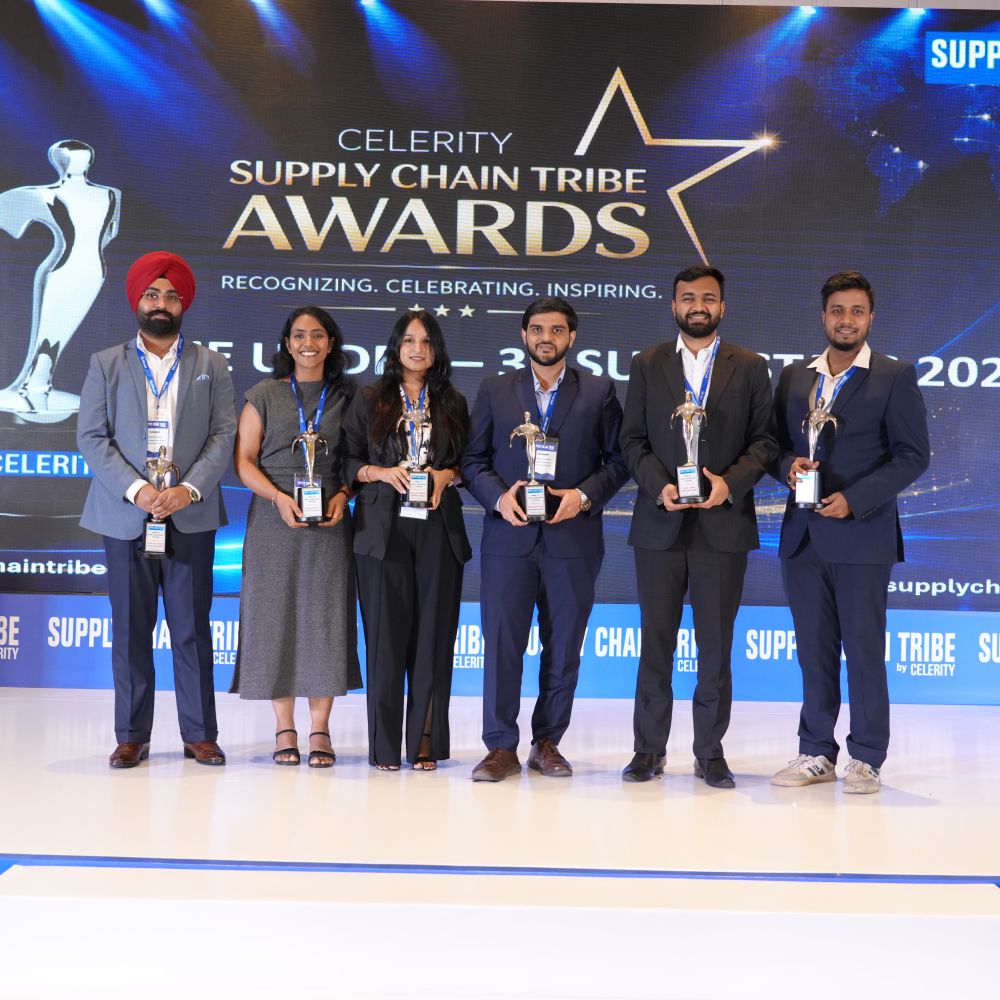
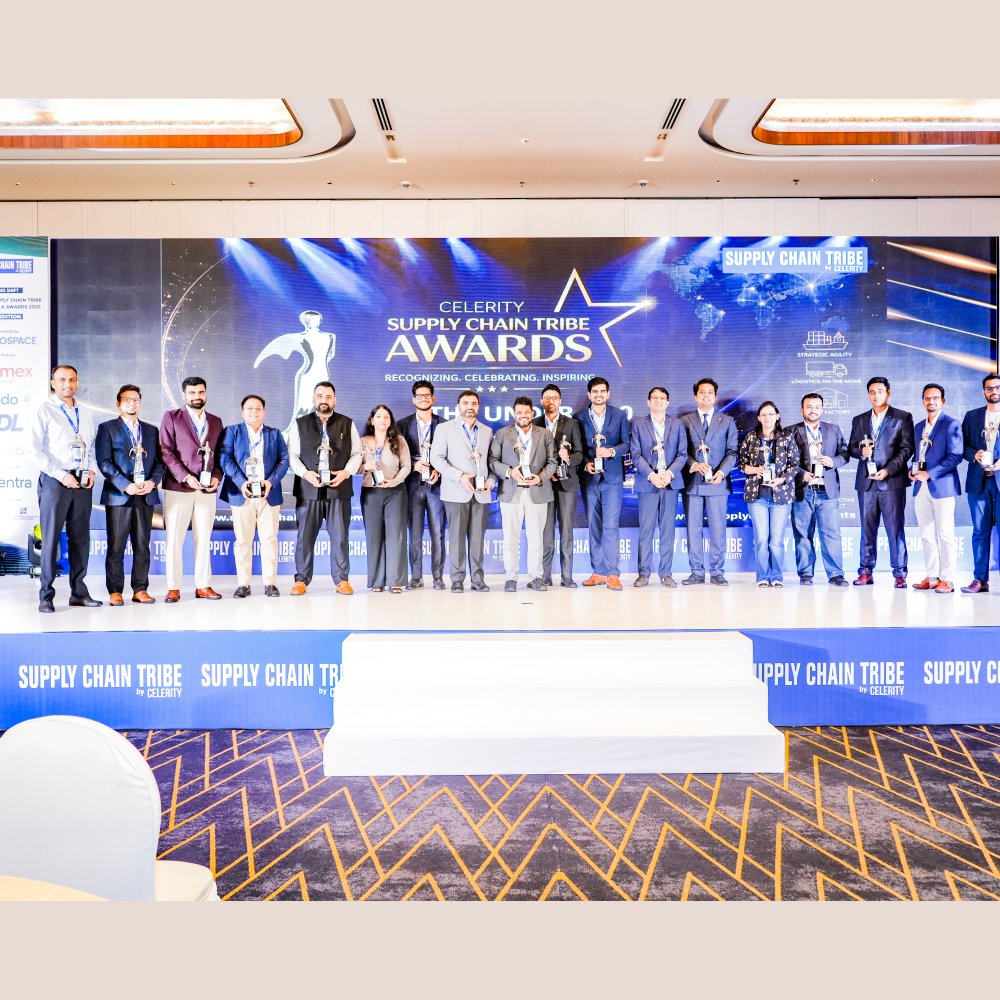
Some awards celebrate achievement. Others celebrate potential. The Celerity Supply Chain Tribe Under 30 Awards honour a rare blend of both—recognising young professionals who are already delivering transformative business impact while shaping the future of supply chain leadership.
This year's winners have demonstrated that innovation has little to do with age and everything to do with vision, execution, and the courage to challenge convention. From harnessing AI and analytics to reinventing procurement, planning, manufacturing, logistics, and customer experience, they have solved complex business challenges while creating measurable value for their organisations.
These are more than award-winning projects—they are stories of resilience, ingenuity, and leadership in action. Discover the remarkable journeys of this exceptional cohort whose bold ideas and relentless pursuit of excellence are shaping the future of supply chains.
In agricultural commodity procurement, timely and reliable market intelligence can be the difference between reacting to market movements and shaping them. Operating in Côte d'Ivoire—one of the world's largest cocoa-producing regions—presented a significant challenge due to the limited availability of structured market data, fragmented supply chains, and low visibility into crop availability across procurement zones. Without granular insights, pricing decisions remained broad-based, limiting competitiveness and reducing the effectiveness of procurement strategies.
To bridge this information gap, I designed a data-driven market intelligence framework that combined agronomic insights with real-time ground-level procurement tracking. Recognizing that crop availability is influenced by both plantation productivity and buyer activity, I developed a two-pronged survey methodology to generate actionable intelligence.
The first survey focused on plantation-level agronomic indicators, capturing critical information on crop health, harvesting patterns, and expected yields. The second tracked procurement activity across cooperative buying points, providing visibility into raw material movement, competitive buying behaviour, and procurement density across different geographies.
To execute the initiative at scale, I deployed a network of 18 field agents using the Kobo digital survey platform, enabling real-time data collection from the ground. Survey outputs were analysed every week to estimate procurement market share by geography as well as by cooperative. These insights transformed decision-making from intuition-based to evidence-led, enabling precise pricing interventions and identifying underserved locations for expanding procurement operations through new buying points.
The intelligence framework significantly strengthened procurement effectiveness by providing an accurate view of crop availability and competitive positioning. Armed with location-specific insights, the procurement team was able to optimize sourcing strategies, improve market penetration, and make faster commercial decisions in a highly dynamic environment.
The initiative delivered measurable business impact, increasing market share by approximately 7% while reducing procurement costs by nearly USD 30 per tonne. Beyond the financial gains, it established a scalable market intelligence model that enhanced visibility, improved decision-making, and demonstrated how digital data collection and analytics can unlock competitive advantage even in some of the world's most challenging procurement markets.
Abhishek Dhanraj
Abhishek Dhanraj, Pathways Operations Manager, Amazon - Building Quality Excellence from the Ground Up
Launching a new manufacturing business is challenging; building one without an established quality management system is even more demanding. When Shyam Steel Industries diversified into the paints business, the organization had no existing infrastructure for paint production, supplier quality management, or process control. The objective was not only to establish operations from scratch but also to create a scalable quality framework capable of supporting rapid business growth without compromising product consistency.
The complexity was amplified by the simultaneous onboarding of more than 40 raw material suppliers to support a portfolio of over 100 SKUs. Each supplier operated with different quality standards, testing methodologies, and documentation practices, making batch-to-batch consistency a significant operational risk. Without a structured quality governance model, scaling production while maintaining customer confidence would have been nearly impossible.
To address this challenge, I designed and implemented a comprehensive end-to-end vendor quality management framework. At its core was a supplier quality scorecard that evaluated every vendor across four critical dimensions—raw material consistency, lead-time reliability, batch defect rates, and responsiveness to quality concerns. Clear qualification thresholds were established to ensure accountability, with underperforming suppliers placed on structured corrective action plans while high-performing partners were rewarded with preferential business allocation, fostering a culture of continuous improvement.
Beyond supplier governance, I built quality assurance directly into the manufacturing process by introducing stage-wise quality checkpoints covering raw material receipt, batch mixing, and finished goods inspection. Statistical Process Control (SPC) techniques were implemented to monitor process stability and minimize batch-to-batch variation. To complete the quality ecosystem, I established a closed-loop feedback mechanism that linked dealer complaints and customer returns back to supplier performance and production process improvements, ensuring every quality issue translated into preventive action.
The impact was transformational. The integrated quality management system enabled the new division to scale confidently while maintaining consistent product quality, supporting revenue growth from USD 10 million to USD 120 million within three years. Improved supplier reliability also reduced inventory carrying costs by approximately USD 2 million per month, unlocking significant working capital efficiencies.
More importantly, the framework evolved into the permanent quality backbone of the paints division, continuing to guide supplier management and manufacturing excellence long after its initial implementation. The initiative demonstrated how a well-designed quality system can become a strategic growth enabler, laying the foundation for sustainable scale, operational discipline, and long-term business success.
Eshan Pratim Mishra
Eshan Pratim Mishra, Divisional Supply Chain Manager, East (RLM), Marico Ltd. - From Planning to Performance
My career over the past three years began at ITC, where I stepped into the world of supply chain at a moment of real inflection — as modern trade and e-commerce accelerated, demand patterns grew volatile, and the traditional, manual way of planning was starting to buckle under the pressure. Taking on all-India supply planning for a large personal care portfolio, I set out to bring order to that volatility, spearheading the implementation of Blue Yonder’s Enterprise Supply Planning platform to connect demand planning, inventory optimization, and supply planning into a single, automated ecosystem. The technology itself was only half the battle — the harder part was bringing planners and cross-functional teams along, moving them from instinct-driven decisions to trusting a system-driven model. Through iterative simulations, validation cycles, and hands-on workshops, I helped build that trust, shortened planning cycles, improved fill rates meaningfully, and helped the business achieve its highest-ever production scale-up across several big categories without a single service disruption. From there, I went further upstream, redesigning ITC’s inventory strategy and factory-volume allocation, identifying inefficiencies, rebalancing production across plants, and minimizing write-offs across multiple SKU transitions through disciplined material balancing — turning planning insight into real, on-ground operational impact.
That experience — of taking a planning decision all the way through to execution — became the natural bridge into my next chapter at Marico, where I moved from designing systems to running them on the ground as Regional Logistics Manager. Here, the same instincts that had shaped supply and production planning at ITC found new expression in distribution: I owned end-to-end logistics across depots and CFAs, tightening coordination between plants, transporters, and distributors, and standardizing depot processes to strengthen compliance. I led a depot through its transition to A-grade status, optimized warehouse space based on SKU mix and seasonality, and built productivity benchmarks that brought data-driven rigor to staffing decisions across depots. I took ownership of annual budget planning for the region and kept audit readiness sharp, sustaining regulatory compliance with minimal non-conformances. I also led infrastructure expansion in remote areas prone to natural calamities, strengthening supply resilience where it mattered most, alongside broader network optimization efforts that delivered strong annual savings and stronger service in some of the business’s most critical markets. Redesigning distributor inventory norms and delivery routes further lifted PDP adherence, cut credit losses, and reduced line deletions.
Seen together, the two roles tell one continuous story — of moving from digitizing and disciplining how a business plans, to operationalizing that discipline all the way through to the last mile, turning complex supply chain challenges into measurable, on-the-ground results at every stage.
Jaskaran Singh
Jaskaran Singh, Senior Supply Chain Analyst, McCormick & Company - Reimagining Inventory Planning Through Lead-Time Intelligence
At Mahle Anand Filter Systems, inconsistent inventory levels across manufacturing plants had become a persistent operational challenge. Excess inventory tied up valuable working capital, while stock imbalances and planning inefficiencies impacted material availability and service performance. Inventory planning was largely manual, with limited visibility and no standardized methodology, making it difficult to respond effectively to changing demand and supplier variability.
To address this, I conceptualized and led the development of a lead-time-driven inventory optimization framework that transformed inventory planning from static assumptions to dynamic, data-driven decision-making. The objective was to establish a standardized planning model that could optimize inventory while seamlessly integrating with the organization's existing SAP MRP ecosystem.
The initiative began with a comprehensive analysis of demand patterns, material consumption, and supplier performance across the network. I benchmarked lead times for more than 25 global suppliers to establish realistic planning parameters and introduced a dynamic MIN-MAX inventory logic that accounted for actual supplier lead times and consumption variability instead of relying on fixed inventory norms. Working closely with IT and planning teams, I embedded this intelligence directly into SAP MRP, ensuring that replenishment decisions became automated, standardized, and scalable across manufacturing locations.
Driving organizational adoption was equally critical. I led cross-functional workshops with procurement, planning, and plant teams to build alignment around the new methodology and address resistance to change. The framework was first piloted in a single plant, where assumptions were validated and refined before being rolled out in phases across four manufacturing facilities. To sustain performance, I established governance mechanisms through regular audits and planning dashboards that monitored inventory health, planning accuracy, and compliance with the new standards.
The results demonstrated the value of combining analytical rigor with operational execution. The initiative delivered a 15% reduction in overall inventory costs, a 14% reduction in inventory days, and a 15% decrease in excess inventory, significantly improving working capital utilization. Material planning accuracy improved by 20%, while better inventory visibility enhanced service levels and reduced stock-out risks across plants.
Beyond the measurable savings, the project fundamentally transformed inventory management from a fragmented, experience-driven process into a standardized, intelligence-led planning system. By integrating advanced planning logic within existing SAP capabilities, the initiative created a scalable foundation for sustainable operational excellence, enabling the organization to improve profitability, strengthen supply chain resilience, and make faster, data-backed planning decisions.
Jasmine Kaur
Jasmine Kaur, Manager, Ernst & Young India - Scaling Smarter Demand Planning with AI
In today’s fast-moving retail environment, effective demand planning depends on the ability to translate fragmented data into timely, actionable insights. The organization faced significant challenges from disconnected retailer-level demand signals, extensive manual planning effort, and static forecasting approaches that struggled to keep pace with changing market dynamics. These constraints led to slower decision-making, limited planner capacity, and inconsistent On-Shelf Availability (OSA), ultimately impacting business performance.
To address these challenges, I co-conceptualized an AI/ML-driven collaborative demand planning platform designed to transform demand planning from a largely manual, data-consolidation exercise into a more proactive, insight-led decision-making process. As the Product Owner, I translated complex business challenges into scalable AI use cases, shaped the product vision and roadmap, and aligned technology capabilities with evolving operational and commercial needs.
Recognizing that successful AI adoption would depend as much on trust as technical accuracy, I established a human-in-the-loop approach that positioned AI as an enabler of planner expertise rather than a replacement for it. Planners could validate, refine, and contextualize AI-generated recommendations before execution, creating the right balance between automation and business judgment. This approach helped build confidence in AI-driven decision-making while accelerating adoption across planning teams.
I led the design and end-to-end delivery of a cloud-based solution that integrated demand signals from multiple systems into a unified view of demand, enabling AI-generated forecasts and recommendations to flow directly into day-to-day planning processes. Beyond product delivery, I drove cross-functional stakeholder alignment, delivery governance, global rollout coordination, and change management, ensuring that the solution was adopted effectively across multiple markets and that the organization was prepared for a broader digital transformation.
The initiative transformed the role of planners by reducing reliance on manual data consolidation and enabling greater focus on strategic decision-making and exception management. The solution delivered significant improvements in planner productivity, contributed to measurable gains in On-Shelf Availability, and generated incremental sales from the first quarter of implementation. More importantly, the platform evolved beyond a single-market solution into a scalable blueprint for collaborative, AI-enabled demand planning, providing a repeatable model for deployment across global operations.
Jaspreet Kaur
Jaspreet Kaur, India Trade Operations Lead, J&J Innovative Medicine - Transforming Import Visibility Through Zero-Touch Automation
We developed a fully automated, zero-touch import tracking solution to address fragmented shipment visibility and manual coordination challenges across multiple logistics partners. By leveraging existing digital tools, email-based shipment updates were automatically captured, standardised, and consolidated into a single source of truth. A real-time dashboard was created to provide end-to-end visibility of import operations, enabling proactive monitoring of shipment status, bottlenecks, and key performance indicators. Automated alerts notified stakeholders of potential delays and KPI breaches, allowing timely intervention and faster decision-making. The solution eliminated manual tracking activities, achieved a 100% zero-touch process, improved operational control and collaboration, and enhanced service reliability, all without requiring additional infrastructure investment. The initiative demonstrates the power of digital innovation and automation in transforming complex operational processes into scalable, efficient, and data-driven solutions.
Sitar Joshi
Sitar Joshi, Sr Manager – Procurement (Commodities), Nestle India Ltd. - Enabling Innovation Through Agile Procurement
As our businesses continued to navigate the aftermath of the unprecedented commodity volatility of 2022, procurement emerged as a strategic enabler in transforming ambitious product concepts into market-ready launches. With new product development (NPD) becoming a key growth driver, the challenge extended beyond sourcing ingredients; it demanded the creation of entirely new, compliant, and resilient supply chains capable of supporting aggressive launch timelines.
Many of the required raw materials were niche and subject to stringent quality and sustainability requirements. These challenges were further compounded by minimum order quantity (MOQ) constraints, the absence of established supplier ecosystems, and the need to balance speed with commercial viability.
To address this, I partnered closely with Business Units, R&D, Quality, and Supplier Development teams to design fit-for-purpose sourcing models tailored to each innovation. By conducting detailed assessments of material value chains, nutritional profiles, supplier capabilities, and processing technologies, I helped establish scalable sourcing frameworks that ensured both quality and agility.
One of the key milestones was developing compliant groundnut and sunflower oil value chains that met stringent food safety requirements across the Foods and OOH business verticals. This involved introducing enhanced processing controls and best practices across both the upstream and downstream value chains.
For one of the new launches (Besan Noodles), we worked on designing a traceable roasted besan flour value chain through chickpea sourcing supported by sustainability interventions at the farm level. Additionally, I built a millet sourcing ecosystem for Millet Noodles and Breakfast Cereals, from concept to industrial feasibility, by integrating multiple cost-efficient origins into a standardized blending model, delivering consistency, cost optimization, and manufacturing efficiency.
These initiatives successfully enabled the commercialization of six new product launches within record timelines. More importantly, they demonstrated how procurement can move beyond cost management to become a catalyst for innovation, building resilient, compliant, future-ready value chains that accelerate speed-to-market while safeguarding profitability and enabling topline growth.
In life sciences, reliable product delivery is more than an operational metric—it is critical to customer confidence, laboratory continuity, and business growth. Recognizing recurring delivery-quality challenges, I led a structured transformation to move the organization from reactive problem-solving to a proactive, prevention-driven model.
Using the Plan-Do-Check-Act (PDCA) methodology, I led a comprehensive review of customer complaints, AS-IS process mapping, and Why-Why root cause analysis to identify systemic gaps across logistics, packaging, product readiness, and delivery execution. These insights shaped a operating model built around standardization, ownership, and prevention.
I established a robust governance framework through clearly
Defined SOPs
RACI matrices
Standardized workflows, creating greater accountability across the fulfilment journey.
To strengthen product readiness, I introduced 100% Pre-Delivery Inspection (PDI) for high-risk products and subsequently expanded the approach across the broader business unit. Packaging standards were also enhanced to improve product protection during transit and minimize avoidable delivery failures.
The transformation delivered measurable results within single quarter:
Dead on Arrival (DOA) complaints declined by 30%,
Complaint value reduced by 23%
Freight costs decreased by 40% through more disciplined and reliable delivery execution.
The improvement in operational consistency also contributed to stronger customer confidence and increased Net Promoter Scores. Beyond the immediate performance gains, the initiative helped restore customer trust and unlock new business opportunities. More importantly, it established a scalable and repeatable delivery-quality framework, embedding continuous improvement into the supply chain rather than treating quality as a post-delivery corrective action.
I strongly believe that sustainable supply chain excellence is achieved when data-driven problem solving, process discipline, and customer-centricity come together to prevent problems before they reach the customer.


 Categories