A distinguished career is rarely the product of a single breakthrough. It is forged across years of high-stakes decisions, complex transitions, and heavy responsibilities that compound into a distinct professional identity. While recognition marks a key milestone, the true value lies in the expansive journey being written behind it.
The Supply Chain Laureates turns the spotlight on leaders whose sustained contributions, strategic agility, and proven impact mark them as the vanguard of their fields. Going beneath the surface of traditional headlines, these conversations explore the defining moments in progress: the choices that opened new directions, the crucible assignments that demanded a different response, and the evolving philosophies that shape executive excellence.
These narratives illuminate the true architecture of leadership in motion—revealing not just where the journey has led so far, but the intellect, strategic pivots, and defining choices that build a lasting legacy piece by piece.
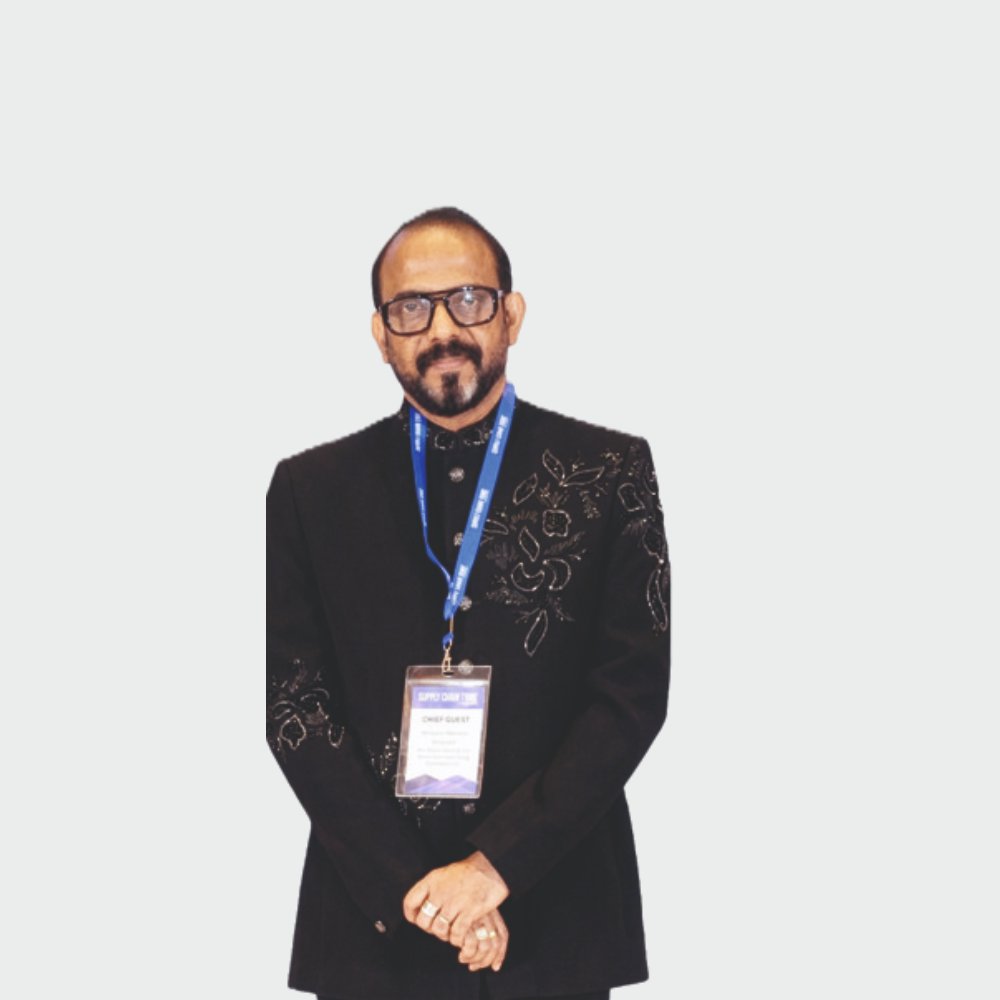
Built for the next ascent - Manoj Kumar, Chief Supply Chain Officer, Amber Enterprises India
Progress rarely comes from standing still. It is shaped by the willingness to question what has worked, remain open to what can be learned and keep raising the bar when the next challenge appears. For Manoj Kumar, Chief Supply Chain Officer, Amber Enterprises India, that philosophy has translated into a career defined by continuous evolution—and today, into an ambition to help build a supply chain capable of matching the scale and complexity of India’s next manufacturing chapter. At Amber Group, he is focused not simply on efficiency, but on creating capabilities that are more resilient, more self-sufficient and better prepared for what lies ahead.
Manoj Kumar
You are stepping into the CSCO role at Amber Group at a pivotal moment for Indian manufacturing. What excites you most about this chapter?
What excites me most right now is the sheer scale of what we are building at Amber Group: not simply a supply chain, but a self-sufficient manufacturing ecosystem, at the precise moment India is ready to lead that charge. We have recently received ECMS approval for large-scale PCB manufacturing under the Atmanirbhar Bharat initiative, and to be part of that, architecting the sourcing strategy, the supplier ecosystem, the commodity intelligence layer, feels genuinely historic.
This chapter is different in kind, not just scale. At Amber, we span consumer durables, EMS, PCBs, and railway subsystems: extraordinary complexity under one roof, deeply backward-integrated, with each vertical at a different stage of maturity. The ambition is to build a supply chain that is not merely efficient today but resilient enough to carry the next decade of Indian manufacturing growth. That is the kind of chapter you remember.
Which books have most shaped your thinking as a supply chain leader?
No single book has shaped me, but five I carry from different stages of a career, each asking a different question.
‘The Goal’ by Eliyahu Goldratt rewired how I think about operations early on. The Theory of Constraints: that every system has one binding constraint and that optimising anything else is largely irrelevant. It is a question I still ask first: where is the actual bottleneck? It has saved me from a great deal of sophisticated work on the wrong variable.
‘Everything is Negotiable’ by Gavin Kennedy built my sourcing foundations. Its central insight: that the most dangerous moment in a negotiation is when you assume the other party's position is fixed, shaped my entire approach to supplier relationships.
‘Maverick’ by Ricardo Semler genuinely unsettled me. The radical trust Semler extended to his people challenged assumptions I had absorbed unconsciously about how organisations must function. I have carried threads of that philosophy into how I structure accountability within my own teams.
‘What Got You Here Won't Get You There’ by Marshall Goldsmith arrived at exactly the right moment, mid-career, when I was moving from strong individual contributor to leading large organisations. Goldsmith's argument that the habits driving early success can become the very ceiling of later leadership was uncomfortable and necessary in equal measure.
And Apple in China, which is, at its core, a study of what a truly optimised supply chain ecosystem looks like when built with sustained commitment and discipline over decades. For those of us helping construct India's manufacturing future, it reads as both inspiration and instruction.
"Every system has one binding constraint, and optimising anything else is largely irrelevant. I still ask first: where is the actual bottleneck?"
How do you approach complex sourcing decisions? Is it more instinct, data, or something else entirely?
Structured experience filtered through data, then tested in conversation. Experience alone makes you pattern-match too quickly. Data alone drives precision on the wrong question. Neither is sufficient on its own.
What works is a sequence: get the data early, test it against what you know, then open it to the room. My sourcing head sees something my operations head does not, and vice versa. The decision that comes out of that conversation is almost always better than the one I would have reached alone. Instinct I treat as a signal to probe, not a conclusion. If something feels wrong despite the data, that question almost always surfaces what the data was not capturing.
Having worked across quality, production, marketing, and logistics before arriving in supply chain also shapes this. When manufacturing pushes back on a sourcing call, I have a genuine sense of what they are seeing. You cannot solve for your internal customer if you have never tried to stand in their position.
You are known as a runner and trekker. How does that discipline translate into how you lead?
Staying physically active and deliberately challenged, in whatever form the day allows. I run, and I trek, and over time it is the mountains that have come to mean the most to me. They are my calling in a way that is difficult to fully articulate. Standing at the base of a significant climb and looking up at where you intend to go reshapes your sense of what is achievable. Mountains do not negotiate. They do not offer a shorter route. They ask you to commit fully, pace yourself honestly, and keep moving even when the terrain is not cooperating.
When I am on a challenging track, I set targets on timing, not just on reaching the summit. Holding yourself to that discipline, on demanding terrain where conditions are never guaranteed, is exactly the mental practice that transfers to complex organisations. The mountain does not care that you had a difficult meeting before you started climbing. You find a way, or you do not reach the top.
I take these challenges with family and team too. Shared difficulty builds something no offsite can replicate. The core discipline, whether running or on a trail, is the same: the commitment must outlast the disruption. I do not exercise at a fixed hour. The day rarely allows it. I find the way, because hard things done only in perfect conditions rarely get done at all.
"Mountains do not offer a shorter route. They ask you to commit fully, pace yourself honestly, and keep moving even when the terrain is not cooperating."
Whose counsel do you value most — professionally or personally?
Honestly, I learn from everyone, from people in my professional network, but equally from those I encounter in the ordinary flow of life. I have picked up genuine insight simply by observing people on the move: the way someone handles a difficult moment, the manner in which a person reads a situation without being told anything. Leadership and human wisdom are everywhere, if you are paying attention.
But my most surprising and humbling teachers are my daughters – Ishita and Prisha. They challenge the status quo far more readily than I do, and when I enter a real conversation with them, they surprise me every time with the depth of knowledge they have acquired so early in their lives. There is a quality to that generation's curiosity, unencumbered by the assumptions that accumulate with experience, that I find instructive. They make me examine things I had quietly stopped questioning.
My elder daughter has started her own venture (GrowCo – Digital production and editing services). Watching her has been a masterclass in a particular kind of courage — the willingness to learn fast, to step deliberately out of comfort, to absorb everything about running a business by actually doing it, and then to show her team the way forward not from a position of expertise, but from one of total commitment. That kind of leadership, earned through action rather than seniority, reminds me regularly of what truly counts.
And from my life partner, I learn patience and belief, two qualities that are quietly foundational to everything else. In the more demanding chapters of leadership, I return to those two things more than I return to any framework or strategy.
How do you manage, motivate, and develop the next generation of supply chain talent?
The biggest shift I have made is giving up the assumption that younger professionals will be motivated by the same things that motivated me at their stage. When I entered the workforce, stability and steady advancement were the implicit contract. Today, the people I most want to keep are asking, within the first six months, whether their work matters and whether they are genuinely growing. That used to make senior leaders uncomfortable, myself included. Now I take it as useful information.
If a young procurement analyst cannot tell me how their work connects to something real — a product we make, a supplier we are developing, a risk we are managing — the accountability for that gap sits with me, not with them. I also no longer pretend to be the most technologically fluent person in the room. My younger team members are often ahead of me in what a new digital tool can and cannot do. My role is to create the conditions in which their learning becomes organisational capability. More curatorial, less directive. I find it far more productive.
What does staying sharp look like for you outside the office?
The mountains. They are my most consistent source of clarity and ambition outside of work. A significant climb demands complete attention and earns its view honestly. There is no shortcut to the ridge, and that honesty is what I find most restoring. I try to stay physically active as a matter of principle, and I actively promote that in my family and my team. What moves me is when someone who started out uncertain finds a new relationship with physical challenge. A few have surprised me completely, and that shift tends to carry into how they approach professional targets as well. Mountains aspire you to bigger things. That feeling rarely stays on the trail.
How would your team describe your leadership style? And how would you describe it?
Straightforwardness, and I mean that in its fullest sense, not simply as a style preference. Most of the time I will say things very directly. I will name what I observe, point to what is not working, and sometimes that makes people uncomfortable. I am aware of it, and I do not apologise for it, because I believe the most respectful thing you can offer another person is an honest signal, not a managed one.
But what matters more than the giving side is being equally hungry to receive it. A true colleague is someone who helps you identify your blind spots: not what you already know about yourself, but the things that limit you precisely because you cannot see them. I seek those people out, and I hold those relationships as the most valuable I have. It takes trust to deliver that kind of honesty, and humility to receive it. Without it, you stagnate.
Which is why I believe this: if you are not improving, you are deteriorating. There is no stable middle ground.
"A true colleague is someone who helps you identify your blind spots. If you are not improving, you are deteriorating. There is no stable middle ground."
What personal disciplines or rules have you set for yourself that help you perform consistently at a high level?
I have become far more selective about the problems I personally insert myself into. Early in my career, I wanted to be in every conversation and across every significant decision, partly because I felt the pressure to demonstrate capability, and partly because letting go was hard. What leading increasingly large and complex organisations has taught me is that the leader who is everywhere is often the ceiling of the team's capability. If every problem routes to me, I have failed to build an organisation that can act without me.
So I am now deliberate about which problems genuinely require my direct involvement, and which ones require me to step back and let the team find the answer, even when I can see the answer already. That restraint is harder than it sounds. I am also more selective about external commitments: I say yes only where I can be fully present. The discipline of honest declining has, I think, made the commitments I do make considerably more valuable — to the people I make them to, and to myself.
And finally, what does the next chapter look like — for you and for the profession?
I am fully in this chapter right now. Amber is a complex, fast-growing organisation with meaningful work ahead, and that is where my attention sits. But when I allow myself to think further out, what I want to build is a body of work, not a résumé. Organisations that became more capable because supply chain contributed something real: not simply cheaper or faster, but more resilient, more transparent, and better prepared for what they did not see coming.
I am also drawn increasingly to the broader ecosystem: the next generation of supply chain professionals, the industry conversation about how India builds procurement maturity to match its manufacturing ambitions. Every summit becomes the base of the next climb. A career works the same way. The question is not where it ends, but what you are willing to keep moving toward.
When you’re managing complex supply chains at breakneck speed, every second—and every decision—counts. Yet, according to Vikas Sharma, Chief Operating Officer, Zepto, the secret to mastering massive scale isn't just speed; it's humility, ruthless prioritization, and staying close to the ground. In this interview, Vikas shares his personal playbook on leadership, decision-making under uncertainty, and why the most powerful growth comes from learning what to say ‘No’ to.
Vikas Sharma
What is the ambition that currently excites you most, and what makes this particular chapter of your journey significant to you?
What excites me most at this stage is the opportunity to build something that can operate on an extraordinary scale without losing human touch. Having spent much of my career building and scaling supply chains, operations and customer experiences, I am increasingly interested in the intersection of technology, people and execution. This chapter feels significant because operational excellence is no longer simply about efficiency or cost. It is about creating speed, resilience, customer obsession and sustainable value together. I want the next phase of my journey to be about building systems and leaders that are bigger than any one individual.
Is there a book, idea or philosophy that has influenced the way you approach life or leadership, and how has it found expression in the way you live or work?
One philosophy that has stayed with me is, “Think big, start small, learn fast.” Operations have taught me that great ideas are easy to discuss but much harder to execute consistently. I believe in solving problems close to the ground, testing quickly, learning from the data and then scaling what works. This has also shaped my leadership style. I don't believe leadership is about having all the answers, but about creating an environment where people ask the right questions, challenge assumptions and learn quickly. For me, progress has always been a combination of ambition and humility: Aim High, Stay Close to Reality.
When faced with a significant decision, what tends to guide you most strongly, experience, instinct, data, discussion or something else?
I would say data gives me direction, experience gives me context, and instinct tells me when something doesn't quite add up. I rarely make important decisions based on just one of these. I like to understand the facts, listen to people closest to the problem, challenge my own assumptions and then make the call. In a fast-moving environment, waiting for perfect information can itself become a bad decision. So, my approach is simple: get enough clarity, make the call, move quickly and be willing to change your mind when the facts change.
What is a personal discipline that has had an outsized influence on your effectiveness, particularly as the demands on your time and attention have grown?
One discipline that has become increasingly important for me is protecting thinking time. As responsibilities grow, it is easy to spend the entire day reacting to meetings, messages and the next urgent issue. Leadership requires creating space to step back and think about what is important. I also try to prioritize ruthlessly. Not everything deserves the same amount of time, and not every problem needs to be solved by the leader. The more senior you become, the less your effectiveness comes from doing more yourself and the more it comes from helping the organization focus on what truly matters.
Whose counsel do you value when you want to look at a situation from a perspective different from your own?
I value people who are willing to disagree with me intelligently. The most valuable counsel doesn't necessarily come from the person with the most seniority. It often comes from someone who sees the problem differently, asks an uncomfortable question or has a completely different experience. I particularly value conversations with people who are close to the customer and close to the ground, as they often see reality that doesn't appear in dashboards or management reviews. My rule is simple: seek people who expand your thinking, not people who simply validate it.
Leadership today involves engaging with people who may have very different expectations of work, purpose and career. What has changed most in your own approach to working with the next generation?
The biggest change has been moving from “telling people what to do” to “creating the context in which they can succeed.” The next generation wants to understand the why, values autonomy and expects their work to have meaning. I see that as a positive change. My role as a leader is therefore less about providing every answer and more about providing clarity, creating ownership and giving people the freedom to experiment. At the same time, I believe the fundamentals haven't changed: high standards, accountability, integrity and respect remain timeless.
What is an interest outside your professional world that has remained a meaningful source of curiosity or enjoyment for you?
I enjoy travelling and exploring new places, particularly observing how different cities and cultures work. Travel gives me a different perspective on everyday life, from how people shop and move to how they communicate and interact with their surroundings. I naturally find myself observing the systems behind these experiences. I also enjoy sport, particularly the competitive aspect of it. Sport is a fascinating reminder that talent alone isn't enough. Consistency, teamwork, strategy and the ability to perform under pressure often make the difference.
What aspect of your personality tends to have the greatest influence on the way you work with people?
I would say intensity with empathy. I am naturally driven by outcomes and enjoy solving difficult problems. I set high standards for myself and, consequently, for the teams I work with. But I have also learned that you cannot build great organisations through pressure alone. People need clarity, trust and the confidence that their leader will stand behind them when things don't go as planned. I therefore try to combine high expectations with genuine accessibility. The best teams are not those that never make mistakes, but those that are comfortable raising a problem early and confident enough to solve it together.
What is something you have become more selective about as your career has progressed, whether it is the opportunities you pursue, the commitments you make or the way you spend your time?
I have become much more selective about where I invest my time and energy. Earlier in my career, growth often meant saying yes to more responsibilities, opportunities and problems to solve. With experience, I have realized that growth is also about knowing what to say no to. I now look for opportunities where there is a meaningful problem to solve, strong people to learn from and the possibility of creating something that lasts. I am less interested in being busy and more interested in being useful. That distinction has become increasingly important to me.
When you look beyond your current role and the milestones ahead, what is the kind of life and leadership journey you would like to be creating for yourself?
Ultimately, I would like my journey to be measured by more than titles, scale or business results. I want to look back and feel that I built things that mattered, developed people who went on to build things of their own, and left every organization stronger than I found it. Professionally, I want to continue working in complex, high-growth environments where technology, operations and people can create extraordinary customer experiences. Personally, I want to maintain curiosity, keep learning and remain grounded despite the scale of responsibility. If there is one legacy I would aspire to, it is to be remembered as someone who built high-performing businesses without losing sight of the people who made them possible.
From experience to impact - Vinay S. Chauhan, Regional Lead, Indirect Procurement – BSAPIC, Bridgestone EMIA
A distinguished career is ultimately defined not by the number of roles held, but by the depth of perspective gained along the way—and the value that perspective creates for others. For Vinay S. Chauhan, Regional Lead, Indirect Procurement – BSAPIC, Bridgestone EMIA, decades of experience across engineering, manufacturing, planning, supply chain and procurement have shaped a philosophy that continues to evolve: from execution, to excellence, to value creation. His journey reflects a rare combination of intellectual curiosity, business breadth and a deep commitment to making complexity simpler, decisions sharper and the people around him more capable.
Vinay S. Chauhan
What is the ambition that currently excites you most, and what makes this particular chapter of your journey significant to you?
What excites me most today is the opportunity to create meaningful value through procurement at a time when our industry is undergoing significant change. Established players face increasingly intense competition from emerging companies with leaner operating models, bringing cost competitiveness into much sharper focus. Procurement has consequently moved closer to the centre of the business agenda, creating an exciting opportunity to contribute directly to business performance.
I am equally energised by the way artificial intelligence is reshaping how we live and work. I was fortunate to develop an interest in AI relatively early, which has helped me understand both its capabilities and its practical applications. I see it as a powerful enabler of productivity, better decisions and simpler ways of working.
This chapter is personally significant as well. When I graduated, I had a simple aspiration: I wanted my final working day to be the day on which I was able to contribute the most to my organisation. In other words, I wanted my value to keep growing with experience, rather than allowing experience to become merely a measure of time served. The earlier stages of my career helped me understand the pulse and nuances of the business across functions and environments. Today, I am in a position to translate that accumulated experience into broader organisational value.
I also find great satisfaction in making complex ideas simple and actionable. Seeing a concept become clear to a colleague is genuinely rewarding. Increasingly, I see my role not only as delivering results, but also as helping others become more capable and effective.
Is there a book, idea or philosophy that has influenced the way you approach life or leadership?
One idea that has influenced me for many years comes from Born to Win. My reading journey began with fiction when a friend introduced me to Alistair MacLean. That sparked a lasting habit, and over time I gravitated towards books that challenged the way I thought about life, work and personal growth. Born to Win left a particularly deep impression on me through a simple reversal of a familiar idea. We often say, “Believe what you see”, whereas the book suggests that we begin to see what we truly believe. To me, this means forming a clear belief about what you want to learn or become, and then remaining alert to the opportunities that can take you there.
When I graduated as a mechanical engineer, my first ambition was to understand engineering in the real world. Opportunities in design and development, followed by the manufacture of machine parts, gave me that foundation. Once I understood how things were made, my curiosity shifted to another question: how does an organisation decide what to make, when to make it and in what quantity? That question led me into production planning and control.
In that role, I interacted frequently with logistics and supply chain teams. I became curious about the challenges they faced and the reasons behind last-minute urgent requests. Eventually, I had the opportunity to lead the function myself. One of my most satisfying experiences was working with a strong team to improve service and fill rates without sophisticated technology or external consultants. We relied on sound fundamentals, data, common sense and continuous improvement.
The same philosophy guides me in procurement today. A business creates value by growing revenue, improving productivity and managing cost intelligently. My ambition is to apply what I have learned across engineering, manufacturing, planning and supply chain to help procurement create that value. Looking back, many of the opportunities in my career began with a belief that something was worth understanding. That is why the idea from Born to Win continues to resonate with me.
When faced with a significant decision, what tends to guide you most strongly—experience, instinct, data, discussion or something else?
I rarely rely on a single factor when making a significant decision. Experience, instinct, data and discussion all have a role. If I had to distil my approach into three elements, they would be understanding the pulse of the situation, then applying judgement and intuition.
Understanding the pulse means looking beyond the visible problem and asking why it exists. That requires data, conversations with people close to the issue and perspectives from different parts of the organisation. No leader can be present everywhere, so listening carefully and learning from the experience of others are essential.
Once the underlying issue is clear, the direction often becomes more apparent. This is where experience and instinct come into play. I do not see instinct as a substitute for analysis; I see it as the ability to recognise a pattern before all the evidence has fully come together. Intuition can also be valuable, but it is most likely to surface when the mind is calm, open and attentive.
For example, during a discussion on master data management, a presenter referred to the UNSPSC classification system. Something about it immediately struck me as significant. We explored it in depth, understood how it could bring consistency to material coding, material groups and taxonomy, and eventually implemented the approach.
That initiative helped create a more structured and mature foundation for master data management, and it remains one of the achievements of which I am particularly proud. It reinforced a lesson I have learned repeatedly: data helps define the problem, discussion broadens perspective, experience provides context, and instinct often tells you where to look more closely.
Whose counsel do you value when you want to look at a situation from a perspective different from your own?
One person whose counsel I have valued greatly is Mr. Ajay Sevakari. He was my manager for nearly two decades, and we worked together for more than 25 years. I had the opportunity to observe his progression from procurement management to becoming a young Director at Bridgestone India and, later, Managing Director of Bridgestone's Diversified Products division in India.
What has always impressed me is his ability to read a situation. He combines strong business awareness with speed of thought and is willing to take an unconventional approach when circumstances demand it. I have seen him navigate difficult negotiations, operational challenges and complex situations with clarity and decisiveness. In the toughest moments, he does not shy away from the hardest decisions, and he remains anchored in strong beliefs, ethics and principles.
The quality I value most is his ability to anticipate how a situation may evolve. He often sees dimensions and consequences that are not immediately apparent to me. That is precisely why I seek his perspective when I want to challenge my own thinking.
I do not look to a mentor simply for an answer. I value someone who helps me view the same situation through a different lens. A conversation with him often sharpens my judgement and enables me to reach a better decision.
What has changed most in your own approach to working with the next generation?
I have a slightly different perspective on this question. There is considerable discussion about how the next generation has fundamentally different expectations of work and career. Although the way those expectations are expressed may have changed, I believe the underlying human needs remain similar: people want to contribute, learn, be respected and experience the satisfaction of accomplishing something meaningful.
My approach, therefore, is not to manage people differently simply because they belong to a particular generation. What has changed is that I am more deliberate about creating an environment in which people understand the problem, participate in solving it and see the impact of their contribution.
We work with a project-oriented mindset. We take a problem as a challenge, examine it through the 5W1H framework - why it exists, what is really happening, who is affected, where and when it occurs, and how it can be solved - and then work through it together. The process can be demanding, but the sense of achievement when a team reaches a solution is tremendous.
I have also learned that people observe a leader more closely than we sometimes realise. If you expect commitment, you must demonstrate it. If the team is struggling with a problem, you cannot simply delegate it and walk away. To a large extent, a team reflects the behaviour that its leader consistently demonstrates.
My biggest learning is therefore simple: focus less on generational labels and more on meaningful work, involvement, consistency and leading by example. I have found that these principles work remarkably well across generations.
What is an interest outside your professional world that has remained a meaningful source of curiosity or enjoyment for you?
I have always believed that if you are digging a well, you are more likely to find water by going deeper in one place than by repeatedly digging shallow wells in different places. That philosophy also describes my interests: I tend to explore a subject deeply rather than move quickly from one interest to another. At present, artificial intelligence is that area of curiosity for me. Although it has clear relevance to my professional life, my interest extends well beyond its immediate workplace applications. I spend considerable time understanding how AI works, how it is evolving and how it may reshape the way people learn, make decisions and solve problems.
What fascinates me most is that we may be witnessing a fundamental change in how humans interact with technology. There is always something new to discover, and that keeps me intellectually engaged. My interest outside the immediate demands of my role is, quite simply, learning deeply about a force that is changing the world around us - and at this moment, that force is AI. In my case, I also need a strong diversion to relax. I often do so my binge-watching during weekends.
What aspect of your personality tends to have the greatest influence on the way you work with people?
Curiosity is probably the personality trait that most strongly influences how I work with people. I am naturally interested in what people are saying, why they are saying it, which experiences shape their perspective and what may be happening beneath the surface of a problem.
That curiosity helps me avoid jumping to conclusions. I prefer to ask questions, understand the context and consider different perspectives before deciding on a course of action. In most business situations, there are multiple stakeholders, competing priorities and unavoidable trade-offs. My aim is therefore not to pursue an ideal solution in isolation, but to find one that is practical, balanced and adaptable across the organisation. For me, curiosity is not simply a desire to know more. It means listening more deeply, understanding the problem more fully and, ultimately, making more thoughtful decisions with people rather than for them.
What is something you have become more selective about as your career has progressed?
As my career has progressed, I have become much more selective about where I invest my time and energy. The lens I increasingly apply is value creation.
Early in my career, my focus was primarily on execution – getting things done well and reliably. Over time, that evolved into a pursuit of excellence: improving processes, raising standards and finding better ways of working. Today, my thinking has moved a step further. I increasingly ask, "What value will this create for the organisation?"
Not every activity that can be done needs to be done, and not every improvement creates meaningful business impact. I have therefore become more selective about the initiatives I pursue and the commitments I make. For me, the journey has been from execution to excellence, and ultimately to value creation.
What is the kind of life and leadership journey you would like to be creating for yourself?
When I look beyond my current role and the milestones ahead, two things matter to me. The first is a sense of satisfaction with the journey so far. I have been fortunate to grow in the way I wanted to grow and, more importantly, to learn in the way I wanted to learn. Each stage of my career has allowed me to understand a different dimension of business, and that continuous learning has been deeply fulfilling.
At this stage, however, my focus is gradually shifting from what I can achieve personally to what I can help create around me. Professionally, I want to continue transforming business operations by making them simpler, more efficient and better able to create value. Equally important is the opportunity to share what I have learned and help others develop into confident future leaders.
Ultimately, I would like my leadership journey to be measured not only by the transformations I helped deliver, but also by the people who grew, accepted larger responsibilities and became leaders in their own right.
Leading where the path is new - Ashish Tripathi, AVP - SCM & Procurement, SDHI
Some leadership journeys are defined by navigating a path that is already known. Others take shape when the path itself is still being created. At SDHI, Ashish Tripathi, Assistant Vice President – SCM & Procurement, SWAN Defence & Heavy Industries (SDHI), is part of a chapter that demands both—building new capabilities while navigating complexity, change and challenges without an established playbook. His approach reflects a strong belief in preparation, persistence and the value of continually stepping beyond the familiar.
Ashish Tripathi
What is the ambition that currently excites you most, and what makes this particular chapter of your journey significant to you?
What excites me the most at the moment is being part of SDHI at a time when we are building vessels that are being built in India for the first time. That brings a completely different set of challenges because there isn't always an established playbook to follow. Every day brings something new, and that makes the journey particularly exciting. At the same time, we are evolving as a shipyard building our capabilities, processes and ecosystem to compete with our global peers. For me, being part of that transformation and helping build those capabilities from the ground up is what makes this chapter of my career particularly significant.
Is there a book, idea or philosophy that has influenced the way you approach life or leadership, and how has it found expression in the way you live or work?
‘The Theory of Constraints’ by Eliyahu Goldratt has influenced the way I look at problems. It taught me to look beyond individual issues and identify the constraint that is actually limiting the overall system. In a complex environment like shipbuilding, that way of thinking is particularly relevant because solving one problem does not necessarily improve the entire system if the real constraint lies elsewhere. Another thought that has stayed with me comes from Professor Boman Moradian at SP Jain, “What gets measured gets analysed, and what gets analysed gets acted upon.” It reflects the way I like to work bringing visibility through data and then using that visibility to drive action.
Another book I have really enjoyed is ‘Elephants and Cheetahs: The Beauty of Operations’ by Prof. Saral Mukherjee of IIM Ahmedabad. I particularly enjoyed exploring these ideas during his lecture. Prof. Mukherjee brilliantly explores the balance between agility and stability in organisations, using elephants and cheetahs as powerful metaphors. What stood out to me is the beauty of understanding how different parts of an operation connect, interact, and ultimately influence the overall outcome.
When faced with a significant decision, what tends to guide you most strongly—experience, instinct, data, discussion or something else?
Usually, it is a combination. I start with facts and data, use my experience to understand what may not be visible in the numbers, and then discuss the decision with people who bring a different perspective. Instinct also has a role, particularly when information is incomplete, but I prefer instinct to be informed by experience rather than driven by emotion.
What is a personal discipline that has had an outsized influence on your effectiveness, particularly as the demands on your time and attention have grown?
Preparation. I have found that the more senior you become, the less time you have to react and the more important it becomes to anticipate. I try to understand the issue before entering a discussion, know the numbers, identify the likely questions and be clear about what outcome I am looking for. It saves time and also gives people confidence that decisions are being made with thought behind them.
Whose counsel do you value when you want to look at a situation from a perspective different from your own?
I have been fortunate that the management at SDHI has been very supportive in this regard. The counsel is not limited to simply being demanding about the outcome; there is also a willingness to provide context and insights that come from experience across industries and businesses. That broader perspective is extremely valuable. Sometimes the answer to a shipping or shipbuilding challenge may not necessarily come from shipping itself. Looking at how another industry has solved a similar problem can open up a completely different way of thinking.
What is an interest outside your professional world that has remained a meaningful source of curiosity or enjoyment for you?
I enjoy playing sport particularly cricket, tennis and, more recently, pickleball. I make it a point to play with friends at least twice a week. Apart from the enjoyment, I think sport is a great way to switch off while still keeping yourself competitive and engaged. I also have a strong interest in the automobile industry. I enjoy following new launches, particularly the technology behind them the engines, drivetrain, features and the engineering that goes into the product. What is particularly interesting today is how Indian automotive brands are increasingly giving established European and Japanese manufacturers a run for their money, not just on price but increasingly on product quality, technology and features.
What aspect of your personality tends to have the greatest influence on the way you work with people?
I would say Persistence. Once I take ownership of something, I tend to stay with it until there is an outcome. But one principle I strongly believe in is that it is never about the person, it is about the problem. You can challenge an issue very firmly without making it personal. I look at it much like sport you keep your eyes on the ball. The objective is to solve the problem and achieve the outcome, rather than get distracted by who is involved or where the disagreement came from.
What is something you have become more selective about as your career has progressed—whether it is the opportunities you pursue, the commitments you make or the way you spend your time?
Interestingly, my career has involved some fairly radical changes decisions that may have been questioned at the time. Moving from sea to shore, moving from Singapore back to India, and then making my current move are all examples. My thinking has always been that comfort is good, but too much comfort can limit learning and growth. I would rather take on a new challenge where I have to learn again than remain in a comfortable environment simply because it is familiar.
That has probably become my personal mantra: if you are no longer learning, you should question whether you are still growing.
When you look beyond your current role and the milestones ahead, what is the kind of life and leadership journey you would like to be creating for yourself?
For me, leadership ultimately comes down to people. If you take care of your people, give them ownership and create the right environment, they will make sure that the work they are responsible for is worth doing. But I also believe that support has to come with responsibility. People need to be accountable for the outcomes they own. The other part that matters to me is seeing people progress. Ideally, I would like to see the people I work with grow into bigger roles within the organisation. And if the right opportunity is not available internally, I would still consider it a success if someone moves outside into a significantly larger role because of the experience and confidence they gained while working with us.
For me, that is one of the most meaningful measures of leadership not just what you accomplish yourself, but what you enable other people to accomplish.


 Categories