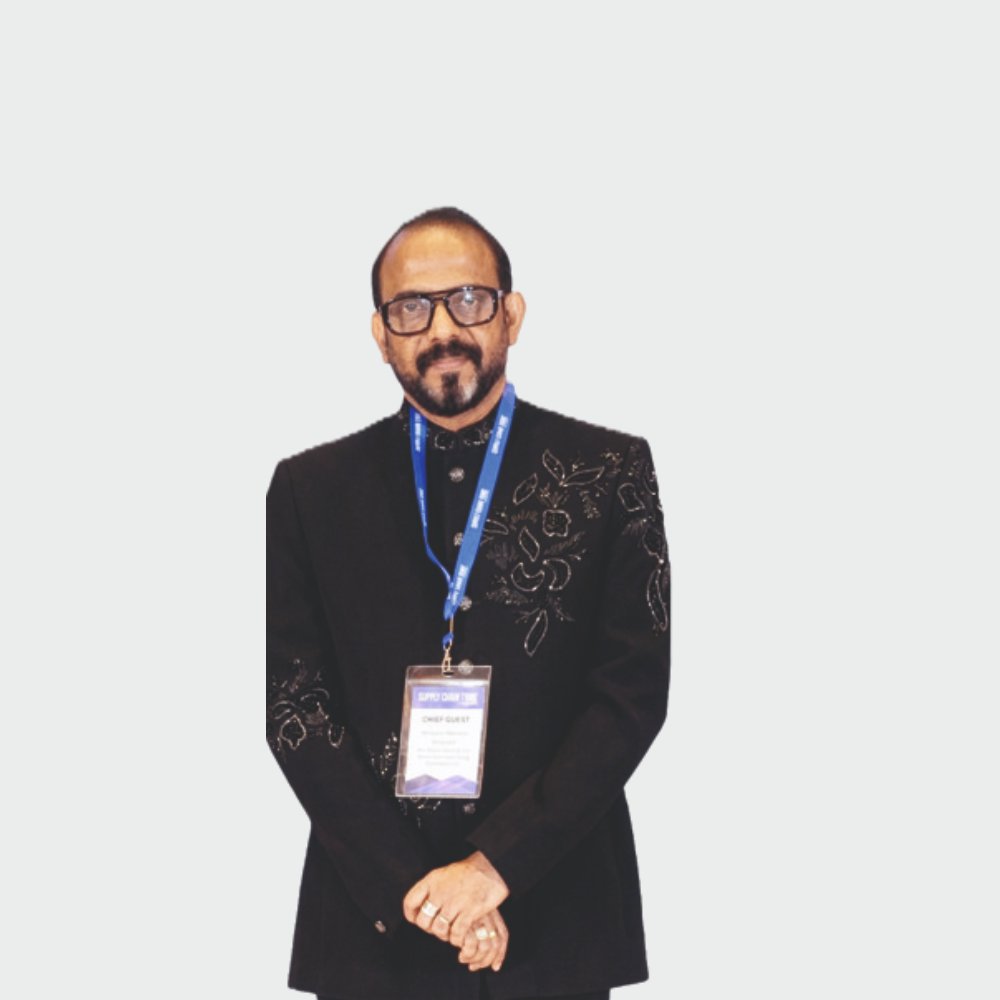
In a world shaped by geopolitical uncertainty, shifting supply chains and accelerating technological change, leadership can no longer be about maintaining control. It must be about building the ability to respond, reinvent and emerge stronger, emphasises Amb. Dr. Dunston Pereira, Group Chief Executive Officer, The Private Office of H.H. Sheikh Ahmed Bin Faisal Al Qassimi, UAE, during his keynote address at the recently held 8th Celerity Supply Chain Tribe Conference & Awards 2026...
We are at a defining moment for leadership. Across the world, businesses are navigating a convergence of pressures unlike anything we have seen before. Geopolitical tensions are reshaping markets and trade. Supply chains remain vulnerable to sudden shocks. Economic uncertainty continues to test business confidence. At the same time, artificial intelligence and other emerging technologies are rapidly changing how organisations operate, compete and make decisions. The pace of change is leaving little room for complacency.
Amb. Dr. Dunston Pereira
What makes this moment particularly challenging is that disruption is no longer isolated or temporary. A geopolitical event in one part of the world can affect supply chains and markets thousands of kilometres away. A new technology can challenge an established business model in a matter of months. Customer expectations are evolving faster, while organisations are under constant pressure to become more responsive, efficient and innovative. In this environment, the traditional assumptions around leadership are being challenged.
For decades, leadership was built around command, control, stability, hierarchy and long-term planning. But when the environment itself is constantly changing, leadership cannot simply be about preserving stability. It must be about preparing organisations to respond when stability disappears. That, to me, is the big shift.
We do not simply need leaders who can help organisations survive disruption. We need leaders who can understand disruption, learn from it and turn it into opportunity and competitive advantage.
FROM CONTROL TO AGILITY
The first shift is from control to agility. The leader of yesterday was often expected to have all the information and make the important decisions. But today’s environment is far too complex and fast-moving for leadership to remain concentrated at the top. The leader of tomorrow must create an organisation where information flows quickly, decisions are made closer to the customer and people are empowered to act. In today’s world, the organisation that adapts faster often wins.
We cannot always predict what is going to happen next. But we can build organisations that are ready to respond faster. This requires a different approach to leadership. It requires trust. It requires empowerment and it requires leaders to recognise that their role is not to have every answer, but to create an environment in which people can respond effectively when the answers are not immediately clear.
FROM RESILIENCE TO STRATEGIC RESILIENCE
The second shift is from simply being resilient to becoming strategically resilient. Geopolitical tensions can disrupt markets. Supply chains can change overnight. Technology can make established business models obsolete. Resilience helps organisations absorb these shocks. But strategic leadership must go further. It must ask: Where is the opportunity in this disruption? Can we build a more agile supply chain? Can we enter a new market? Can technology give us an advantage? Can we move faster while competitors are waiting?
Every challenge can also create an opportunity to think differently. The winners of the future will not necessarily be those who avoid disruption. They will be those who learn faster from disruption and act faster because of it. That is the difference between simply recovering from change and using change to move forward.
FROM COMPETING TO REINVENTING
The third shift is from simply competing to continuously reinventing ourselves. We often ask who our competitors are. That will always remain an important question. But perhaps an even more important question today is: What could make our current business model irrelevant? The greatest threat may not come from a traditional competitor. It could come from AI. It could come from a new technology. It could come from a new generation of consumers. Or it could come from a company that does not even exist today. The conventional definition of competition is changing. That is why leaders must create cultures where questioning, experimentation and innovation are encouraged. Organisations must be willing to challenge themselves before the market does it for them. The ability to continuously reinvent is becoming one of the most important capabilities an organisation can build.
AI AND THE HUMAN ADVANTAGE
Artificial intelligence represents another major shift in the leadership landscape. AI is not simply another technology for organisations to adopt. It is changing how businesses operate, how decisions are made and how competitive advantage is created. But as technology becomes more powerful, human leadership becomes even more important. AI can process information. But it cannot replace judgment, courage, empathy, ethics and purpose. The leaders of tomorrow will therefore need to combine technological intelligence with human intelligence. Technology can make organisations faster and more efficient. But leadership must ensure that progress remains connected to people, values and purpose. The question is not whether technology will change the way we lead and operate. It already is. The real question is whether we can combine its potential with the qualities that remain uniquely human.
THE COURAGE TO CHANGE
So what does the new leadership model look like? It is leadership built on vision instead of hierarchy, agility instead of rigidity and empowerment instead of control.
It combines resilience with opportunity, technology with humanity and purpose with performance. Most importantly, it requires the courage to change before we are forced to change. Leadership is not tested when everything is going according to plan. Leadership is tested when the plan no longer works. When markets change. When uncertainty arises. When teams are under pressure. And when the future is unclear. That is when leadership matters most.
BUILDING THE STRENGTH TO WIN WHAT COMES NEXT
Perhaps the most important question we should ask ourselves is not simply: Can our organisation survive the next disruption? Instead, we should ask: Can our organisation emerge from the next disruption stronger, faster and more competitive? Because disruption is no longer an event. Disruption is the environment in which we operate and leadership must evolve with it.
The old leader said, “Follow me.” The new leader says, “Let us navigate this together.”
In essence, the BIG SHIFT today is that leadership today is not about predicting every turn the future will take, it is about building the capability, trust, relationships and collective strength to succeed in whatever future arrives. Our choices must reflect our hopes, not our fears.
As we look ahead, the opportunity before us is clear: to build bridges, create opportunities, empower people and inspire meaningful change.


 Categories