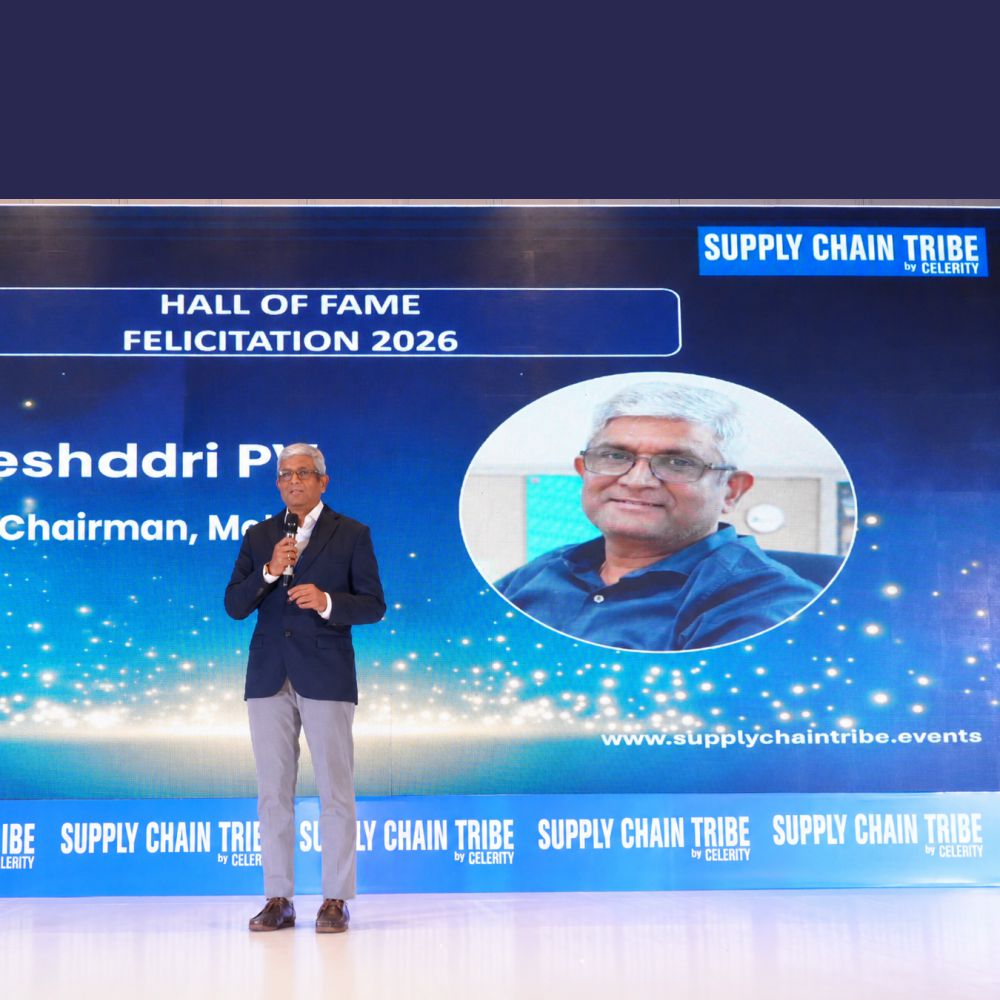
Some leadership lessons reveal themselves only with time—through difficult assignments, trusted mentors, changing circumstances and the people who shape a career along the way. The inspiring journey of PV Sheshadri, Executive Vice President, Reliance Retail, reflects that accumulation of experience, with each chapter adding to a leadership philosophy grounded in trust, accountability and the belief that people grow when they are given both responsibility and room to lead. From staying close to the work to knowing when to step back, his perspective is ultimately about creating capable teams and an environment where accountability can thrive—giving people the confidence to take ownership and the space to carry that responsibility forward.
After a career of sustained achievement, what would you describe as your personal success mantra—and how has it evolved with experience?
I have always believed in maintaining positivity, blindly trusting my mentors and leaders. A highly supportive family makes a substantial difference, and in my case, it came at the cost of many sacrifices my family had to make. I did not pick my assignments, instead, I blindly followed whatever was assigned to me and tried to learn and contribute to every assignment that came my way. I was also fortunate to have highly supportive colleagues and co-workers who believed in me and in my way of working. I always believed in a collaborative approach rather than a ‘My Way or The Highway’ attitude. Getting your hands dirty is the best way to earn trust among your co-workers and staff, alongside effective delegation. I believe in being straightforward in my communication. At the same time, I believe strongly in using resources responsibly and conducting business in an ethical and conscientious manner.
There is an old saying: ‘Well begun is half done’. For me, however, the other half is about consistently showing up and doing the work, particularly when circumstances are difficult. There will always be challenging situations, but I have learned that our response to those situations often defines us more than the situations themselves.
Over the years, my understanding of success has also changed. Early in my career, I naturally placed greater emphasis on execution, performance, and achieving results. With experience, I have come to appreciate that sustainable success is much broader. It is about building capable teams, developing people, and giving them the opportunity to grow in areas where they have the potential to excel. One of the lessons I have learned is that a leader does not necessarily have to have all the answers. Sometimes, the most valuable thing we can do is recognise potential in others, give them the right direction, and create the space for them to become better. I believe in being honest with people, especially when the message is difficult.
Is there a book that has had a lasting influence on the way you think or lead? Is there a particular idea from it that you have consciously brought into your own life or leadership?
Honestly, I am not a great reader. I am a patient listener and observer. Most of my learnings have come from listening to people and being hands-on. However, if I were to say that books had no influence in my life, I would be wrong. Coming from a hard-core operations background, I have always been drawn to books that deal with real challenges, though there are very few that I have actually read.
One book had a great influence on my life: “The Goal”, gifted to me by one of my mentors. It is a management-oriented novel by Eliyahu Goldratt, a business consultant famous for his Theory of Constraints. The Goal is a study of operations management, focusing on the theory of constraints and bottlenecks. The characters Alex and Jonah have had a long-lasting impression on my career journey — their combination of skills in identifying bottlenecks and resolving them, whether in professional or personal life, was compelling. Though the methods may seem archaic compared to today's AI-era problem-solving approaches, the fundamentals still hold good.
Over the years, I have increasingly realised that leadership is not about having all the answers or personally controlling every decision. It is about creating clarity, building trust, and giving people the ownership to deliver. When a person understands the larger purpose of what they are doing, they are more likely to take genuine accountability for the outcome.
I personally believe that ownership and accountability, when supported by trust, save a great deal of time and energy. A leader cannot and should not try to be involved in every detail. If you have chosen the right people, you need to trust them and give them the space to perform.
Mentors can shape a leader long after a particular chapter has ended. Which mentor or influence has had a lasting impact on you, and what aspect of their thinking continues to stay with you?
When I look back, I would not say that my journey has been shaped by one particular mentor. It has been shaped by many people, experiences, and circumstances across different stages of my life from my childhood and college years to the different phases of my professional journey. Each phase brought different people and different lessons. Some taught me through their guidance, some through their expectations, and sometimes even through situations that were difficult or uncomfortable. Looking back, I can still see their great influence on me even today.
If I divide my career into three most important phases: 1) Birth, 2) Shaping and Nurturing, and 3) Maturity — there were three important people who played a significant role in my life. When I entered the industry as an intern, knowing nothing and simply needing a job to support a large family of eight people, the only goal I had in mind was to stick around and do everything assigned to me efficiently. I was an obedient follower who knew nothing about the industry. The only lesson I learned in this phase was to never say no to any assignment, to stay hungry, keep learning, and create a positive impression. This was my Phase 1.
During Phase 2, which was a short stint but an impactful one, I started working with a mentor who was a thorough professional and a highly sincere person. Though I was the most junior person in the department, I had the privilege of reporting to the most senior person in it. I never planned for it to be this way, but it happened, and I consider it a blessing in disguise. This mentor was instrumental in introducing me to processes, people management, quality, and devotion all while being sincere in everything he did. Communication skills and international trade were the best things one could hope to learn from him. He was instrumental in nurturing and shaping me.
The third phase demanded a high level of maturity and conduct. It was the longest phase. This mentor was not only like extended family and a close friend, but also my longest-serving boss over a prolonged period of my career. He pushed me into extreme challenges, extracting my maximum potential. While guiding me through every step of this phase, he ensured he had my back and that I was taken care of. His management and entrepreneurial skills made me stand out in the competition and eventually enabled me to lead an organisation that he had created. This phase left a long-lasting impression, and from there, I never looked back. I owe him this success.
Looking back, having spent over three decades in the industry, the journey has not been a cakewalk. It was a tough one that came with substantial sacrifices. I realise that all of these experiences pushed me to become more self-driven, to set my own goals, and, importantly, to find satisfaction in doing something meaningful and productive at the end of the day.
One thing I have consistently admired in the people who influenced me is the ability to maintain high standards without losing respect for people. That has shaped my own belief that leadership is not about having all the answers or being the smartest person in the room. It is about having the confidence to listen, learn from others, and bring together people who may know more than you in certain areas. I still look at youngsters who are half my age with an expectation of learning something from them that I may have missed. I am a firm believer in the concept of “Reverse Mentorship” and am still looking for someone to take on that role and help me see something beyond myself. Someday, I may find one.
You have led across generations with very different expectations of work, purpose and success. How do you adapt your leadership to connect with younger professionals while allowing them the space to bring their own strengths and perspectives?
I believe the fundamentals of leadership remain the same, but the way we connect with people must evolve with the times. Younger professionals today come with a strong desire to learn, contribute, and see meaningful progress in their careers. They are also more willing to question established ways of working, experiment with technology and AI, and ask why something is being done in a particular way. I see that as a positive. As leaders, we should not expect the next generation to think exactly the way we did.
At the same time, I believe young professionals look to their leaders for more than direction. They want to see what is possible, learn from the way their leaders work, and feel that their contribution can lead to meaningful growth over time. That places a responsibility on leaders to lead by example not only through what we say, but through the quality of work, the decisions we make, and the standards we set every day.
My approach is to give people clarity on the outcome we are trying to achieve, while giving them the freedom to find their own way of getting there. I encourage them to question, challenge assumptions, experiment, and put forward their ideas with confidence. I often tell young professionals not to be afraid of making mistakes or of asking difficult questions. What matters is that they learn, take ownership, and have the courage to try.
However, freedom has to come with accountability. Empowerment does not mean lowering standards; it means giving people the opportunity to take responsibility for those standards. All of this demand patience and perseverance. Please do not fall short on these. This is my small piece of advice to the present generation.
As a new generation of leaders enters positions of greater responsibility, what qualities do you believe will become increasingly important—and which qualities remain timeless?
I believe the ability to learn, unlearn, and most importantly apply what you learn will become increasingly important. The business environment is changing quickly: technology, consumer behaviour, decision-making approaches, and business models are all evolving. Leaders therefore cannot depend only on what worked in the past or what worked in a particular competitive environment. The willingness to question one's own assumptions and adapt is becoming essential. Leadership today is less about having all the answers and more about bringing together different perspectives, making informed decisions, and helping people perform at their best.
At the same time, some qualities will never become outdated. Integrity, humility, accountability, resilience, and respect for people irrespective of their position or role will always matter. Technology can change the way we work, but it cannot replace trust. Being honest, transparent, and upfront with people, particularly during difficult situations, is what builds credibility over time.
The business environment continues to change at remarkable speed. What do you do personally to remain open to new ideas, new ways of working and perspectives that may be very different from your own?
I believe one should remain a student throughout their career, but learning should also be shared. Whatever I have gained through my professional experience, I have always tried to pass on to others whenever I felt it could help them. I believe leadership is not only about acquiring knowledge, but also about creating the next generation of people who can carry that knowledge forward and improve upon it.
I also make it a point to listen first, particularly to people who have different experiences and perspectives from my own. Younger colleagues often bring a fresh way of looking at technology, processes, and emerging business models. Instead of assuming that experience always means knowing better, I believe it is important to understand what is changing and why.
At the same time, I travel a lot and strongly believe in staying connected to the ground. Data, reports, and presentations tell us what is happening, but conversations with the people who are actually doing the work often help us understand why it is happening. That understanding is essential for making practical decisions. I also try not to become attached to a particular way of working simply because it has worked in the past. Experience should improve our judgement but should not be a constraint.
Having worked with people across different generations and personalities, what do you look for beyond credentials when you recognise someone with the potential to lead?
For me, attitude matters a lot more than aptitude. Cultural alignment is a must, and staying grounded with a nimble approach is what makes a candidate truly deserving of the title of “Leader”. Credentials are important, but they tell only one part of the story. Beyond qualifications and experience, I look for people who demonstrate curiosity, ownership, the ability to work with others, and most importantly a consistent ability to create meaningful impact for the business.
I look for people who are willing to take responsibility, especially when no one is watching or when the outcome is not as expected. When things go wrong, I value people who focus on finding solutions rather than finding someone to blame. Similarly, when things go well, the ability to recognise and give credit to the team is an important quality. The team is the hero here.
Over the years, has there been a leadership practice or principle that has become so integral to the way you work that it now comes almost instinctively?
One principle I have come to believe strongly in is to focus on the problem, not the person. In any organisation, things will go wrong. The important thing is how we respond when they do. My first instinct is to understand what happened, why it happened, and what we can do differently to prevent it from happening again rather than immediately looking for someone to blame.
I have also learned that good leadership requires asking questions and listening carefully before forming an opinion. As we gain experience, there can be a tendency to assume that we already know the answer. But every situation is different, and the people closest to the problem often have insights that may not be visible from a distance. Ultimately, I believe people perform at their best when they know they can speak openly, acknowledge mistakes, and raise difficult issues without fear. Creating that kind of environment is one of the most important responsibilities of a leader.
What interests outside business continue to hold your attention, and have any of them influenced the way you approach your professional life?
I am a fitness enthusiast something that has been embedded in me since childhood. I am also a qualified mountaineer with both Basic and Advanced mountaineering certifications from a reputed institute in Darjeeling. I have led many expeditions to the Himalayas during my younger days, and it is there that my leadership skills first began to evolve. Both fitness and mountaineering require discipline, consistency, and a willingness to push yourself beyond your comfort zone.
I also love photography and filmmaking. I have learned video editing watching YouTube. I love to travel and experience different cultures around the world. I am a reasonably good cook, love good food, and enjoy exploring it wherever I go. On weekends, I love to spend time on a hill or in the kitchen. Mountaineering and hiking, in particular, give me a different perspective. They teach you to be comfortable with uncertainty, to keep moving when the journey becomes difficult, and to focus on the destination without losing sight of the terrain in front of you.
Having experienced leadership across several decades, what is one perspective you believe the next generation would benefit from carrying forward—and what would you encourage them to define for themselves?
I would encourage the next generation to stay grounded in a few simple principles that remain relevant regardless of how much the workplace or technology changes: integrity, hard work, continuous learning, meaningful relationships, and respect for knowledge, people, and resources.
I would also tell young professionals to believe in themselves without becoming overconfident, and to remain resilient even when things do not go according to plan. Careers rarely move in a straight line. There will be failures, changes in direction, and moments of self-doubt. What matters is the ability to learn from those experiences, adapt, and keep moving forward. I would also encourage the younger generation to take care of their mental and physical well-being. Career growth is important, but so is having the energy and mindset to enjoy the journey of life. Find time for hobbies, exercise, family, or anything that helps you manage stress, recharge, and feel good about yourself. A healthy mind and body are essential for sustainable success.
I would also encourage the next generation not to measure success only through titles, compensation, or how quickly they reach the next position. Those things are important, but success should ultimately be defined by each individual. For one person, it may be professional achievement; for another, it may be creating something meaningful, having time for family, building a strong team, or making a positive difference. Maintain your values, take care of your relationships, and keep learning. Career growth takes time, and credibility is earned through consistent actions rather than quick achievements.


 Categories