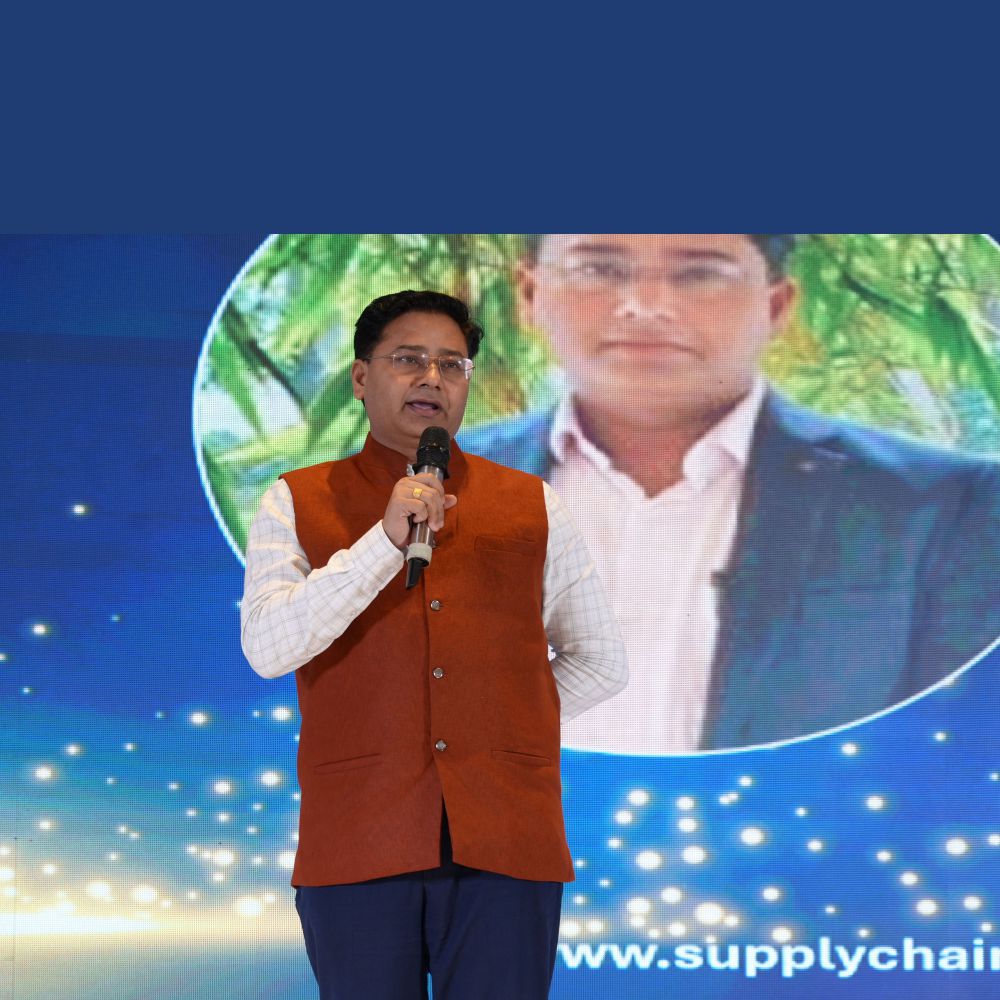
A career gains depth when experience begins to change not only what you know, but how you see. For Dr. Atul Kharate, Chief Operating Officer, Indian Oil Adani Ventures, that perspective has been shaped by staying grounded, listening before deciding and remaining receptive to ideas that come from different generations, functions and experiences. His approach to leadership reflects the ability to look beyond the immediate—bringing clarity of purpose together with openness, giving people responsibility while knowing when to step in, and recognising that sustainable value is built through consistent choices over time. At its core is a belief that leadership becomes richer when it makes room for different viewpoints, continuous learning and a more considered understanding of what success truly means.
After a career of sustained achievement, what would you describe as your personal success mantra—and how has it evolved with experience?
My success mantra has always been simple: stay grounded, keep learning and remain consistent. Over the years, I have realised that success is rarely about one big achievement. It is about consistently delivering value, building trust and staying committed over the long term. With experience, my focus has gradually shifted from seeking immediate recognition to creating sustainable value—for the organisation, for my colleagues and for the people I work with. I believe that is what creates a meaningful and lasting career.
Is there a book that has had a lasting influence on the way you think or lead?
The 7 Habits of Highly Effective People by Stephen Covey has had a lasting influence on the way I think and lead. The principle “Begin with the end in mind” has particularly stayed with me. It reminds me that before deciding what to do, we should be clear about what we are trying to achieve. I try to apply this by first defining the objective and then aligning people, priorities and actions towards it. It has helped me remain focused, particularly when there are multiple competing priorities.
Which mentor or influence has had a lasting impact on you?
I have been fortunate to learn from several leaders and mentors at different stages of my career. Each of them has contributed something valuable to the way I think and work. One lesson that has stayed with me is: ‘Listen carefully before you decide’.
I believe good leadership is not about having all the answers. It is about creating an environment where people feel comfortable sharing different perspectives, listening carefully to those views and then taking a considered decision. That approach has helped me understand that sometimes the best leadership comes not from speaking more, but from listening better.
How do you adapt your leadership to connect with younger professionals?
I don't believe leadership should be one-size-fits-all. Different generations bring different experiences, expectations and strengths. With younger professionals, I focus on clarity of expectations, freedom to execute and regular feedback. They bring tremendous energy, technological orientation and fresh perspectives, and I see that as a strength. My role is not to tell them exactly how everything should be done. It is to provide direction, give them responsibility, remove roadblocks and create an environment where they can learn. I believe people grow when you give them both responsibility and the space to make decisions, learn from mistakes and develop their own style.
What qualities will become increasingly important for the next generation of leaders—and which remain timeless?
I believe adaptability, resilience and collaboration will become increasingly important. The pace of change today means that leaders must be comfortable with uncertainty, continuously learn and be willing to rethink established ways of working. At the same time, some qualities will never become outdated—integrity, accountability, humility and respect for people. Technology and business models may change, but leadership ultimately remains about people, trust and the ability to take responsibility. Those fundamentals will always matter.
What do you do personally to remain open to new ideas and perspectives?
I try to remain curious and, most importantly, listen to people at different levels and across different functions, rather than only to people who think like me. I make an effort to understand new technologies, emerging business models and changing expectations among customers and employees. I have also learnt that a good idea does not necessarily come from the most senior person in the room. Sometimes the best insight comes from someone much younger or from someone who is closest to the ground and sees the problem every day. For me, staying open to those perspectives is an important part of continuing to learn.
What do you look for beyond credentials when you recognise leadership potential?
Beyond credentials, I look for ownership. I notice people who don't wait to be told what needs to be done. They identify a problem, take responsibility and try to find a solution. I also look for integrity, curiosity, resilience and how a person responds when things don't go according to plan. Technical skills can be developed with experience and training, but attitude, ownership and integrity are much harder to teach. Those qualities, in my view, are strong indicators of leadership potential.
Has there been a leadership practice that has become instinctive over the years?
One principle that has become almost instinctive for me is: be accessible and lead from the front when the situation demands it. People should know that their leader is available when they need guidance or support. At the same time, being accessible doesn't mean becoming the bottleneck for every decision. I believe effective leadership is about finding the right balance between being available when needed and empowering people to make decisions independently. When a situation requires the leader to step forward, I believe you should do so. When the team is capable of leading, you should give them the space to do it.
What interests outside business continue to hold your attention?
I have a strong interest in academic research, and I also enjoy travelling, reading and interacting with people from different backgrounds and walks of life. These interests give me an opportunity to step outside my immediate professional environment and look at things from different perspectives. Research has taught me patience and curiosity; travel has taught me adaptability; and meeting different people has reinforced the importance of listening and understanding perspectives that may be very different from my own. I think these experiences ultimately make you a better professional because they keep you grounded, observant and open to learning.
What perspective would you like the next generation to carry forward, and what would you encourage them to define for themselves?
I would tell the next generation: don't be in a hurry to build a title; focus on building credibility. Learn your fundamentals, take ownership of your responsibilities, keep learning and, above all, treat people with respect. Titles and positions may change, but the credibility you build through your work and your relationships stays with you. At the same time, I would encourage young professionals not to simply inherit someone else's definition of success. Define success for yourself. But whatever that definition may be, build it on strong values, continuous learning and the courage to take responsibility. In the long run, I believe that combination creates both a successful and meaningful career.


 Categories